


Manufacturing Industries Class 10 Notes PDF (Chapter 6 Geography) | Hindi & English विनिर्माण उद्योग
Class 10 | Geography (Contemporary India – II)
Teacher: OM SIKARWAR | CLASSORB.COM
Bilingual Notes (Hindi + English)
Manufacturing Industries Class 10 Notes (Chapter 6 Geography) are important for CBSE exams. In this chapter, you will learn about types of industries, agro-based industries, mineral-based industries, and industrial pollution in a simple bilingual (Hindi + English) format.
Table of Contents
- 🔹 Importance of Manufacturing Industries
- 🔹 Classification of Industries
- 🔹 Agro-Based Industries
- Cotton Textile Industry
- Jute Industry
- Sugar Industry
- 🔹 Mineral-Based Industries
- Iron and Steel Industry
- Aluminium Smelting
- Chemical Industry
- Fertilizer Industry
- Cement Industry
- Automobile Industry
- IT & Electronics Industry
- 🔹 Industrial Pollution & Environmental Degradation
NCERT-Manufacturing-Industries-Class-10-Notes by OM SIKARWAR
दोस्तों, एक बार की बात है। Diwali से पहले Harish अपने माँ-बाप के साथ Kanpur के बड़े बाज़ार में गया। वहाँ उसने देखा — जूते, कपड़े, चीनी, चाय, दिए (earthen lamps) — सब कुछ! उसने पूछा:
Harish: “Papa, इतना सारा सामान कहाँ से आता है? क्या सब घर में बनता है?”
Papa: “Beta, यही तो Manufacturing है! Raw materials को process करके valuable products बनाना।”
और बस यहीं से हमारे Chapter 6 की शुरुआत होती है — Manufacturing Industries!
1. Importance of Manufacturing Industries Class 10 विनिर्माण का महत्त्व क्यों है?
Om Sir class में आए। Board पर लिखा: “Manufacturing = Backbone of Economy”
Sir: “Arjun, बताओ — अगर India में कोई factory नहीं होती तो क्या होता?”
Arjun (UP wala): “Sir, सब कुछ import करना पड़ता! बहुत महँगा पड़ता।”
Sir: “Bilkul sahi! इसीलिए Manufacturing इतनी ज़रूरी है।”
Manufacturing Industries क्यों ज़रूरी हैं — 5 बड़े कारण:
- Agriculture को modernise करती है — tractors, pumps, fertilisers factories से आते हैं।
- Unemployment और Poverty दूर करती है — secondary व tertiary sector में jobs मिलती हैं।
- Foreign Exchange कमाती है — export से dollars आते हैं।
- Regional Disparities (क्षेत्रीय असमानता) कम होती है — tribal, backward areas में industries लाना।
- आत्मनिर्भरता बढ़ती है — import पर निर्भरता घटती है।
Local Example: Kanpur की leather industry, Ludhiana का hosiery, Varanasi का silk — ये सब manufacturing के उदाहरण हैं!
2. Industries का Classification (उद्योगों का वर्गीकरण)
Priya (Gujarat वाली) ने पूछा: “Sir, इतने सारे उद्योग — इन्हें कैसे याद करें?”
Sir: “Priya, Table से याद करो — आसान है!”
|
वर्ग / Category |
विवरण / Description |
|---|---|
|
Agro-based(कृषि-आधारित) |
Cotton, Jute, Silk, Woollen, Sugar, Edible oil — कृषि products से बनते हैं। |
|
Mineral-based(खनिज-आधारित) |
Iron & Steel, Cement, Aluminium, Machine tools — खनिज से। |
|
Basic / Key Industries |
Iron, Steel, Copper — दूसरे उद्योगों को raw material देते हैं। |
|
Consumer Industries |
Sugar, Toothpaste, Paper, Sewing machines — directly हम उपयोग करते हैं। |
|
Public Sector |
BHEL, SAIL — Govt. owned. |
|
Private Sector |
TISCO, Bajaj Auto, Dabur — Individual/Company owned. |
|
Joint Sector |
Oil India Ltd (OIL) — Public + Private मिलकर। |
|
Cooperative Sector |
Maharashtra का Sugar industry — workers/producers मिलकर चलाते हैं। |
|
Heavy Industry |
Iron & Steel — भारी raw material, भारी output. |
|
Light Industry |
Electrical goods — light raw material. |
⚡ Trick: BASIC = बड़े भाई जो दूसरों को support करते हैं! CONSUMER = हम रोज़ इस्तेमाल करते हैं।
3. Agro-based Industries (कृषि-आधारित उद्योग)
3a. Cotton Textile Industry — ‘Mumbai के Mills की कहानी’
Rohan (Rajasthan वाला) बोला: “Sir, हमारे यहाँ तो Jodhpur में कपड़ा बनता है, लेकिन Mumbai क्यों famous है?”
Sir: “Rohan, क्योंकि Mumbai में cotton growing belt पास में है (Maharashtra, Gujarat), climate moist है, transport अच्छा है, बंदरगाह है, और labour मिलती है। इसीलिए पहली successful textile mill 1854 में Mumbai में लगी।”
- Cotton textiles — ancient India में handloom से; 18th century में power-looms आए।
- India में spinning (सूत कातना) centralised — Maharashtra, Gujarat, Tamil Nadu में।
- Weaving (बुनाई) decentralised — traditional designs के लिए cottage industry।
- Handspun Khadi — Gandhi ji का आग्रह था, large employment देती है।
📌 Local Example: Varanasi का Banarasi Silk (UP), Ludhiana का Woollen (Punjab), Mysuru का Silk (Karnataka) — ये सब textile industry के हिस्से हैं!
3b. Jute Textile Industry — ‘Golden Fibre की कहानी’
Sonu (Bengal वाली): “Sir, हमारे Hooghly नदी के किनारे इतनी Jute mills क्यों हैं?”
Sir: “Sonu, बहुत अच्छा सवाल! Jute उगती है Ganga Delta में, पानी वहाँ मिलती है processing के लिए, सस्ता labour है West Bengal, Bihar, Odisha, UP से, और Kolkata export के लिए port है। Perfect combination!”
- India — largest producer of raw jute, second largest exporter (after Bangladesh).
- First Jute mill — 1855, Rishra, near Kolkata.
- Partition के बाद — Jute producing area (East Pakistan / Bangladesh) अलग हो गया, mills India में रहीं।
- Jute products: Gunny bags, carpet backing, rope, hessian cloth.
🌟 Hooghly basin में Jute mills क्यों? — Proximity to raw material + water + cheap labour + Kolkata port!
3c. Sugar Industry
Arjun: “Sir, UP में इतनी sugar mills हैं, लेकिन अब south में जा रही हैं — why?”
Sir: “Arjun, UP और Bihar में sugarcane की sucrose content कम होती जा रही है। South में, especially Maharashtra और Karnataka में, cane ज़्यादा sucrose देती है, climate cooler है — longer crushing season। इसीलिए Mills South की तरफ shift हो रही है।”
- India second largest producer of sugar in the world.
- 60% mills — UP और Bihar में (traditional sugarcane belt).
- Cooperative sector में successful — Maharashtra की sugar cooperatives famous हैं।
- Raw material bulky है इसलिए mills sugarcane areas के पास ही होती हैं।
4. Mineral-based Industries (खनिज-आधारित उद्योग)
4a. Iron and Steel Industry — ‘सबसे Basic Industry’
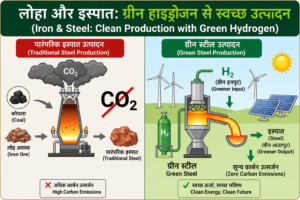
Sir ने कहा: “Iron and Steel = Mother of all industries!” क्योंकि हर industry — heavy, medium, light — इस पर depend करती है।
- Raw materials: Iron ore + Coking coal + Limestone (ratio 4:2:1).
- Heavy raw material है, इसलिए location उन्हीं areas के पास होती है जहाँ raw materials मिलें।
- Chhotanagpur Plateau region — India का सबसे बड़ा Iron & Steel cluster.
- Major plants: Jamshedpur (TISCO — Private), Bhilai (SAIL — Public), Durgapur (West Bengal), Bokaro (Jharkhand), Rourkela (Odisha), Burnpur, Vijayanagar, Salem, Bhadravati, Vishakhapatnam.
💡 याद करने का तरीका: ‘J-B-D-B-R’ — Jamshedpur, Bhilai, Durgapur, Bokaro, Rourkela — India के 5 main steel towns!
Steel production और consumption = Index of a country’s development!
4b. Aluminium Smelting
Priya: “Sir, Aluminium क्यों इतना important है?”
Sir: “Priya, Aluminium — light है, corrosion resistant है, heat का अच्छा conductor है, malleable है। Aircraft, utensils, wires, steel/copper की जगह use होता है।”
- Raw material: Bauxite (bulky, dark reddish rock).
- 4-6 tonnes Bauxite → 2 tonnes Alumina → 1 tonne Aluminium.
- Regular electricity supply ज़रूरी है।
- Plants: Odisha, West Bengal, Kerala, UP, Chhattisgarh, Maharashtra, Tamil Nadu.
- India is the second most important metallurgical industry.
4c. Chemical Industries
- Inorganic chemicals: Sulphuric acid, Nitric acid, Alkalies, Soda ash — fertilisers, glass, soaps में use.
- Organic chemicals: Petrochemicals, synthetic fibres, plastics, dyes, drugs — oil refineries के पास.
- India में chemical industry fast-growing और diversifying है।
4d. Fertiliser Industry
- Main products: Urea, DAP (Diammonium Phosphate), Complex fertilisers (N+P+K).
- Potash — 100% import होती है (India में reserves नहीं).
- Major states: Gujarat, Tamil Nadu, UP, Punjab, Rajasthan + AP, Odisha, Bihar, Goa, Delhi, Maharashtra, Assam, WB, Karnataka.
4e. Cement Industry
- Essential for: Buildings, bridges, roads, dams, airports, factories.
- First cement plant: 1904, Chennai.
- Raw materials: Limestone, Silica, Alumina, Gypsum.
- Coal और electric power ज़रूरी। Rail transport needed (bulky goods).
- Gujarat plants — Gulf countries को export करते हैं।
4f. Automobile Industry
- Trucks, buses, cars, motorcycles, scooters, three-wheelers, multi-utility vehicles.
- Liberalisation (1991) के बाद boom आया — foreign models से demand बढ़ी।
- Major centres: Delhi, Gurugram, Mumbai, Pune, Chennai, Kolkata, Lucknow, Indore, Hyderabad, Jamshedpur, Bengaluru.
Local Example: Lucknow के पास Barabanki में Ashok Leyland की assembly, UP में TATA trucks!
4g. Information Technology & Electronics Industry
- Products: Transistors, televisions, telephones, cellular telecom, radar, computers.
- Bengaluru = Electronic Capital of India.
- Major IT hubs: Bengaluru, Noida, Mumbai, Chennai, Hyderabad, Pune.
- Software Technology Parks (STPs) — major cities में established.
- Employment generation में major role, hardware & software दोनों।
5. Industrial Pollution & Environmental Degradation (प्रदूषण)
Sonu ने पूछा: “Sir, factories से फायदा तो बहुत है, लेकिन नुकसान क्या है?”
Sir: “बहुत सही सवाल Sonu! Industries 4 types का pollution करती हैं।”
|
प्रदूषण का प्रकार |
कारण व प्रभाव |
|---|---|
|
वायु प्रदूषण(Air Pollution) |
Sulphur dioxide, carbon monoxide, airborne particles — chemical factories, brick kilns, refineries से। |
|
जल प्रदूषण(Water Pollution) |
Organic & inorganic wastes, paper/pulp, textiles, tanneries, dyes, heavy metals — rivers में। |
|
तापीय प्रदूषण(Thermal Pollution) |
Factories का गरम पानी rivers/ponds में — aquatic life को harm। |
|
शोर प्रदूषण(Noise Pollution) |
Generators, machinery, factory equipment — hearing impairment, stress, blood pressure। |
Pollution Control के उपाय (Control Measures)
- Water use minimise करें; 2 stages में recycle करें।
- Rainwater harvesting — water requirements meet करने के लिए।
- Hot effluents treat करें — flocculation, sedimentation।
- Primary treatment: Mechanical (screening, grinding).
- Secondary treatment: Biological process.
- Tertiary treatment: Biological + chemical + physical (recycling wastewater).
- Smoke stacks में electrostatic precipitators, fabric filters, scrubbers, inertial separators लगाएँ।
- Coal की जगह oil/gas use करें factories में।
- Noise: Machinery में silencers, earplugs/earphones use करें।
NTPC Example: ISO 14001 certified, proactive environmental approach — water, oil, gas conservation। Ash pond management, liquid waste management।
Quick Revision — Key Points (एक नज़र में)
- Manufacturing = Raw materials → Valuable finished goods.
- Classification: Agro-based, Mineral-based; Public, Private, Joint, Cooperative; Basic, Consumer; Heavy, Light.
- Cotton Textile: Mumbai (1854 first mill); Maharashtra, Gujarat, Tamil Nadu (spinning).
- Jute: Hooghly belt, West Bengal; India = largest producer.
- Sugar: India = 2nd largest; 60% mills in UP-Bihar; shifting south.
- Iron & Steel: Chhotanagpur Plateau; TISCO (Jamshedpur), SAIL (Bhilai).
- Aluminium: 4-6T Bauxite → 1T Aluminium; needs regular electricity.
- Automobile: Post-1991 boom; Bengaluru, Delhi, Pune, Chennai major centres.
- IT/Electronics: Bengaluru = Electronic Capital.
- Pollution: Air, Water, Thermal, Noise — 4 types.
- NTPC: ISO 14001 — Model for environmental management.
📝 NCERT Book Exercises — पूरे Answers
➤ Section A: Multiple Choice Questions (MCQs)
|
Q1 |
Which one of the following industries uses bauxite as a raw material? (a) Aluminium Smelting (b) Cement (c) Paper (d) Steel ✔ Ans: (a) Aluminium Smelting |
|
Q2 |
Which one of the following industries manufactures telephones, computers, etc.? (a) Steel (b) Electronic (c) Aluminium Smelting (d) Information Technology ✔ Ans: (b) Electronic |
Section B: Short Answer Questions (30 words)
Q1. What is manufacturing?
Ans: Manufacturing means the production of goods in large quantities after processing raw materials into valuable products. For example, paper is made from wood, sugar from sugarcane, iron and steel from iron ore, and aluminium from bauxite. यह secondary sector की activity है।
Q2. What are basic industries? Give an example.
Ans: Basic industries (आधारभूत उद्योग) are those which supply their products as raw materials to manufacture other goods. Example: Iron and Steel industry supplies steel to make machinery, automobiles, tools, etc. ये “mother industries” कहलाती हैं।
Section C: Long Answer Questions (120 words)
Q3(i). How do industries pollute the environment?
Ans: Industries cause four types of pollution: Air Pollution: Chemical factories, brick kilns, refineries release sulphur dioxide, carbon monoxide, smoke, and dust. Bhopal Gas Tragedy is a grim reminder. Water Pollution: Industries dump organic & inorganic wastes, dyes, heavy metals (lead, mercury), synthetic chemicals into rivers. Paper, textile, tannery industries are major culprits. Thermal Pollution: Hot water released into rivers and ponds kills aquatic life.Noise Pollution: Factory machinery, generators, and electric drills cause hearing impairment, stress, increased heart rate and blood pressure.
Q3(ii). Steps to minimise environmental degradation by industry?
Ans: Several steps can be taken:• Minimise water use; recycle in 2+ stages.• Treat hot effluents before releasing — Primary (mechanical), Secondary (biological), Tertiary (chemical + physical) treatment.• Harvest rainwater.• Fit electrostatic precipitators, fabric filters, scrubbers, inertial separators in chimneys.• Use oil/gas instead of coal.• Fit silencers on machines; provide earplugs.• Regulate groundwater extraction by law.Model: NTPC has ISO 14001 certification and follows comprehensive environmental management.
Section D: Activity — One Word Answers
|
Question |
Answer |
|---|---|
|
(i) Used to drive machinery (5 letters) |
POWER |
|
(ii) People who work in a factory (6 letters) |
WORKER |
|
(iii) Where the product is sold (6 letters) |
MARKET |
|
(iv) A person who sells goods (8 letters) |
RETAILER |
|
(v) Thing produced (7 letters) |
PRODUCT |
|
(vi) To make or produce (11 letters) |
MANUFACTURE |
|
(vii) Land, Water and Air degraded (9 letters) |
POLLUTION |
Section E: Word Search Puzzle Answers
|
Clue |
Answer (Word Search) |
|---|---|
|
Clue 1: Textiles, sugar, vegetable oil — from agriculture |
AGROBASED |
|
Clue 2: Basic raw material for sugar industry |
SUGARCANE |
|
Clue 3: Also known as the ‘Golden Fibre’ |
JUTE |
|
Clue 4: Iron-ore, coking coal, limestone — raw materials of this industry |
STEEL (Iron and Steel) |
|
Clue 5: A public sector steel plant in Chhattisgarh |
BHILAI |
|
Clue 6: Railway diesel engines are manufactured in UP at this place |
VARANASI (Diesel Locomotive Works) |
Heavy vs Light Industry Classification
|
Category |
Items (from Textbook Activity) |
|---|---|
|
Heavy Industry (भारी उद्योग) |
Oil, Knitting Needles, Brassware, Fuse Wires, Watches, Shipbuilding, Electric Bulbs, Automobiles |
|
Light Industry (हल्के उद्योग) |
Sewing Machines, Electric Bulbs, Paint Brushes |
Manufacturing Industries Class 10 Notes (E.M) PDF free Download
Manufacturing Industries Class 10 Notes (H.M) PDF free Download
All the best! | अध्यापक: OM SIKARWAR | CLASS ORB.COM
“Manufacturing is the backbone of India’s growth — समझो, सीखो, आगे बढ़ो!”
