

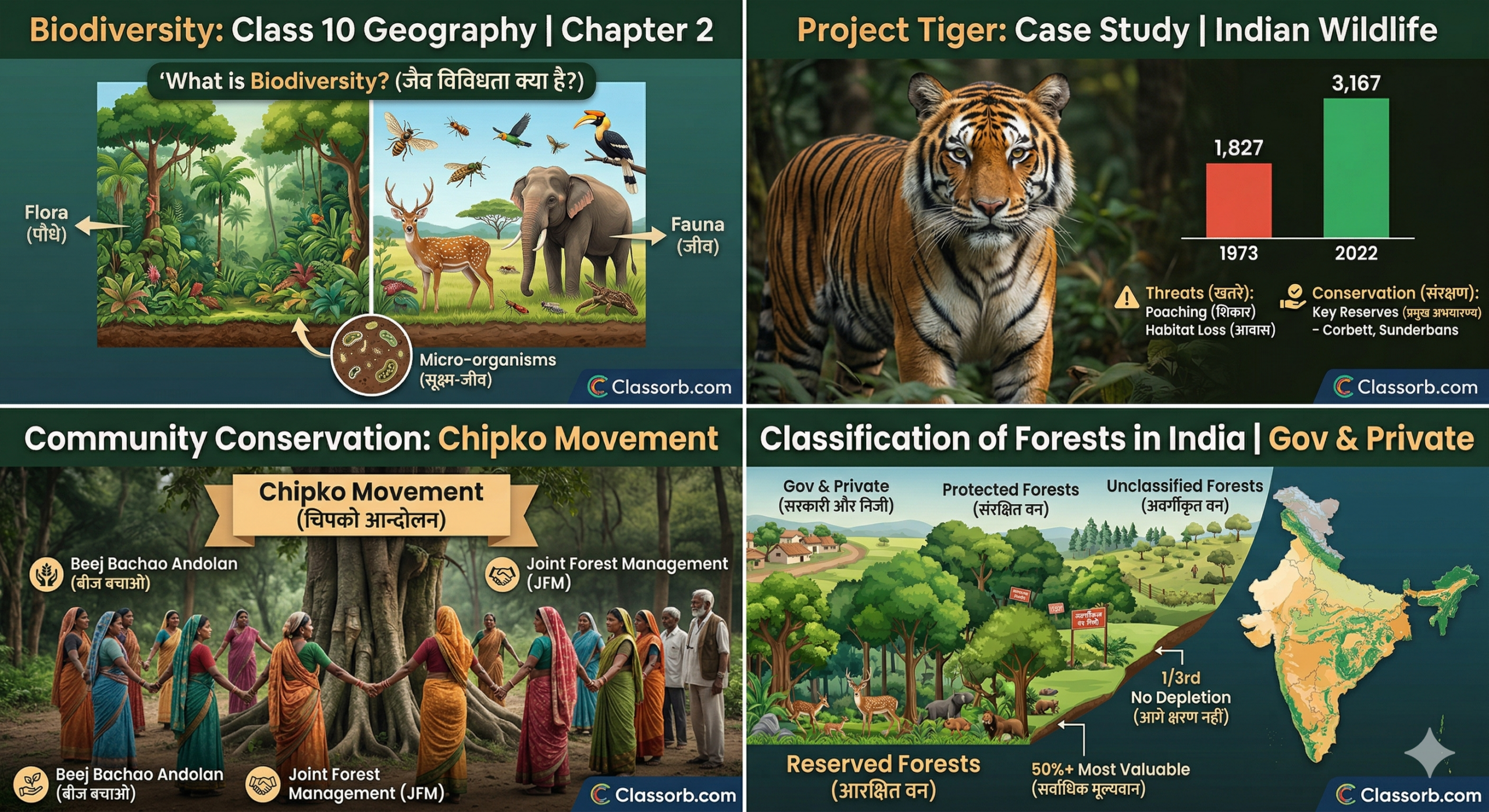
Forest and Wildlife Resources Class 10 Easy PDF and Voice Notes Geography | NCERT
अध्याय 2
वन एवं वन्य जीव संसाधन
Forest and Wildlife Resources
Forest and Wildlife Resources Class 10 Easy Audio Notes Part 1
Story-Style Notes | Hindi Devanagari + British English
नमस्ते छात्रों! क्या आप Forest and Wildlife Resources Class 10 के इस चैप्टर को लेकर थोड़े कंफ्यूज्ड हैं? Don’t worry, क्योंकि हम आपके लिए लेकर आए हैं सबसे आसान और सटीक Easy PDF and Voice Notes।
अक्सर ज्योग्राफी के इन टॉपिक्स को रटना मुश्किल होता है, लेकिन यहाँ हमने पूरे चैप्टर को बहुत ही सरल भाषा में समझाया है। इस पोस्ट में आपको न केवल डाउनलोड करने के लिए Free PDF Notes मिलेंगे, बल्कि हमने Voice Notes भी ऐड किए हैं ताकि आप चलते-फिरते या कान में ईयरफोन लगाकर पूरा चैप्टर सुन सकें और रिवीजन कर सकें।
Whether you are preparing for boards or school tests, ये नोट्स आपकी तैयारी को super fast बना देंगे। तो चलिए, बिना देर किए Biodiversity और Conservation के इस सफर को शुरू करते हैं और बोर्ड एग्जाम्स में टॉप करने की ओर एक और कदम बढ़ाते हैं!
|
शिक्षक की बात: Teacher’s Note: बच्चों, आज हम एक बहुत ज़रूरी विषय पढ़ेंगे — Children, today we shall study a very important topic — वन (Forests) और वन्यजीव (Wildlife). अगर वन नहीं, तो हम भी नहीं। बस इतनी सी बात है। If there are no forests, there is no us. It is as simple as that. चलो, एक कहानी की तरह समझते हैं — बिल्कुल आसान भाषा में! Let us understand it like a story — in the simplest language possible! |
विषय १ — जैव विविधता Topic 1 — Biodiversity
एक सरल प्रश्न से शुरू करते हैं — अपने घर के आस-पास क्या क्या दिखता है? (Let us begin with a simple question — what do you see around your home?)
कहीं पेड़ हैं, कहीं घास है, कहीं चिड़ियाँ हैं, कहीं अनेक कीड़े-मकोड़े हैं। There are trees, grass, birds, and countless insects. This variety of life is what we call Biodiversity.
|
जैव विविधता (Biodiversity) का अर्थ: किसी क्षेत्र में पाए जाने वाले सभी पौधों, जानवरों और सूक्ष्म-जीवों की विविधता को जैव विविधता कहते हैं। The variety of all plants, animals and micro-organisms found in an area is called Biodiversity. |
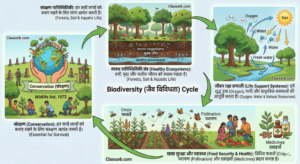
भारत — जैव विविधता में अत्यंत समृद्ध देश India — A Country Immensely Rich in Biodiversity
भारत विश्व के सबसे अधिक जैव विविधता वाले देशों में से एक है। India is one of the world’s richest countries in terms of biological diversity. यहाँ इतने प्रकार के पौधे और जानवर हैं जो शायद पूरी दुनिया में कहीं नहीं मिलते। The variety of flora and fauna found here is possibly twice or thrice the number yet to be discovered.
|
सोचकर देखो: Think about it: तुम रोज़ाना कितनी चीज़ें इस्तेमाल करते हो जो वनों से आती हैं? How many things do you use daily that come from forests? जवाब: दवाइयाँ, फल, लकड़ी का फर्नीचर, कागज़, गोंद… सूची बहुत लंबी है! Answer: Medicines, fruits, wooden furniture, paper, resin… the list is extremely long! |
लेकिन आज यह सब danger में है। But today all of this is under serious threat. इसीलिए संरक्षण (Conservation) अत्यंत ज़रूरी हो गया है। That is why conservation has become absolutely essential.
विषय 2 — संरक्षण क्यों ज़रूरी है? Topic 2 — Why Must We Conserve?
तुम्हारे मन में एक सवाल आ रहा होगा: “Sir, if we cut a few trees, what will happen?” बहुत कुछ होगा! Quite a lot, actually! Let us understand:
|
कार्य Function |
महत्त्व Importance |
|
हवा शुद्ध करना Clean Air |
पेड़ CO₂ लेते हैं, O₂ देते हैं। Trees absorb CO₂ and release O₂. Without them, air becomes toxic. |
|
जल-चक्र बनाए रखना Water Cycle |
वन वर्षा लाते हैं और भूजल बनाए रखते हैं। Forests attract rainfall and maintain groundwater levels. |
|
मृदा संरक्षण Soil Conservation |
वन मिट्टी को बाँधे रखते हैं; बाढ़ और भूक्षरण रोकते हैं। Forests hold soil in place, preventing floods and erosion. |
|
आनुवंशिक विविधता Genetic Diversity |
अलग-अलग प्रजातियों से नई दवाइयाँ और फसलें मिलती हैं। Different species yield new medicines and crop varieties. |
|
कृषि सहायता Agricultural Support |
अधिक प्रजातियाँ = अधिक खाद्य सुरक्षा। More species means greater food security. |
|
जलीय जैव विविधता Aquatic Biodiversity |
मछलियाँ भी वनों पर निर्भर हैं। Fisheries too are heavily dependent on forest ecosystems. |
|
परीक्षा युक्ति: Exam Tip: ‘संरक्षण क्यों ज़रूरी है?’ — यह प्रश्न बार-बार आता है। ‘Why is Conservation necessary?’ — this question appears repeatedly in exams. ऊपर दिए ६ बिंदु याद रखो। Remember the 6 points given above. |
Forest and Wildlife Resources Class 10 Easy Audio Notes Part 2
Subject 3 — भारतीय वन्य जीव अधिनियम, १९७२ Topic 3 — Indian Wildlife (Protection) Act, 1972
१९६०-७० के दशक में संरक्षणवादियों ने माँग की — During the 1960s and 70s, conservationists demanded —
भारत में एक मज़बूत वन्य जीव सुरक्षा कार्यक्रम चाहिए। India needs a strong national wildlife protection programme. तब १९७२ में यह ऐतिहासिक अधिनियम आया। Thus, in 1972, this landmark Act was passed.
|
इस Act में क्या-क्या था? What did this Act contain? • संरक्षित प्रजातियों की सूची प्रकाशित की गई। • An all-India list of protected species was published. • लुप्तप्राय जानवरों का शिकार और व्यापार — पूर्णतः प्रतिबंधित। • Hunting and trade of endangered animals — completely banned. • राष्ट्रीय उद्यान और वन्यजीव अभयारण्य स्थापित किए गए। • National Parks and Wildlife Sanctuaries were established. • केंद्र सरकार ने विशेष परियोजनाएँ घोषित कीं। • The Central Government announced special conservation projects. |
विशेष रूप से संरक्षित जानवर Animals Given Special Legal Protection
|
जानवर Animal |
विशेष बात Why Special? |
|
बाघ Tiger |
शिकार से बहुत कम हो गया; Project Tiger से बचाया जा रहा है। Drastically reduced due to poaching; being saved through Project Tiger. |
|
एक सींग वाला गैंडा One-horned Rhinoceros |
केवल असम में मिलता है — अत्यंत दुर्लभ। Found only in Assam — extremely rare. |
|
कश्मीरी बारहसिंगा (हंगुल) Kashmir Stag |
जम्मू-कश्मीर का राज्य पशु; अब बहुत कम बचे हैं। State animal of J&K; very few remain. |
|
घड़ियाल Gharial |
मगरमच्छ की एक प्रजाति — विलुप्ति के कगार पर। A crocodilian species — on the brink of extinction. |
|
एशियाई शेर Asiatic Lion |
केवल गुजरात के गिर वन में। Found only in the Gir Forest, Gujarat. |
|
भारतीय हाथी Indian Elephant |
विशाल क्षेत्र में घूमता है; मानव-संघर्ष का शिकार। Roams vast areas; faces human-wildlife conflict. |
|
काला हिरण (चिंकारा) Black Buck |
राजस्थान में मुख्यतः पाया जाता है। Mainly found in Rajasthan. |
|
गोडावण (ग्रेट इंडियन बस्टर्ड) Great Indian Bustard |
घास के मैदानों में रहता है; अत्यंत संकटग्रस्त। Lives in grasslands; critically endangered. |
|
हिम तेंदुआ Snow Leopard |
हिमालय में — बहुत दुर्लभ। Found in the Himalayas — very rare. |
Forest and Wildlife Resources Class 10 Easy Audio Notes Part 3
विषय ४ — प्रोजेक्ट टाइगर Topic 4 — Project Tiger
|
एक समय था जब भारत में ५५,००० बाघ थे। Once upon a time, India had 55,000 tigers. फिर क्या हुआ? शिकार, आवास की हानि और मानवीय लालच से… Then what happened? Poaching, habitat loss and human greed… …केवल १,८२७ बाघ बच गए। …only 1,827 tigers remained. तब १९७३ में एक मिशन शुरू हुआ — Project Tiger! Then in 1973, a mission began — Project Tiger! |
बाघ के लिए प्रमुख खतरे Major Threats to the Tiger
- शिकार (Poaching) — tiger की खाल और हड्डियाँ अवैध बाज़ार में बेची जाती थीं।
- आवास की हानि (Habitat Loss) — वन काट दिए गए, बाघ का घर छिन गया।
- शिकार आधार में कमी (Prey Base Reduction) — जो बाघ खाता है, वह भी कम हो गया।
- बढ़ती मानव जनसंख्या — लोग वनों में घुसने लगे।
- पारंपरिक दवाइयाँ (Traditional Medicines) — एशिया में बाघ के अंगों का उपयोग होता था।
|
भारत और नेपाल — India and Nepal — दुनिया के दो-तिहाई बाघों को घर देते हैं। provide home to about two-thirds of the world’s surviving tiger population. इसीलिए ये दोनों देश शिकार और अवैध व्यापार के मुख्य निशाने बन गए। That is why these two nations became prime targets for poaching and illegal trading. |
प्रमुख बाघ अभयारण्य Key Tiger Reserves
|
बाघ अभयारण्य Tiger Reserve |
राज्य State |
|
कॉर्बेट राष्ट्रीय उद्यान Corbett National Park |
उत्तराखण्ड Uttarakhand |
|
सुंदरवन राष्ट्रीय उद्यान Sunderbans National Park |
पश्चिम बंगाल West Bengal |
|
बाँधवगढ़ राष्ट्रीय उद्यान Bandhavgarh National Park |
मध्य प्रदेश Madhya Pradesh |
|
सरिस्का वन्यजीव अभयारण्य Sariska Wildlife Sanctuary |
राजस्थान Rajasthan |
|
मानस बाघ आरक्षित क्षेत्र Manas Tiger Reserve |
असम Assam |
|
पेरियार बाघ आरक्षित क्षेत्र Periyar Tiger Reserve |
केरल Kerala |
विषय ५ — वनों का वर्गीकरण Topic 5 — Classification of Forests
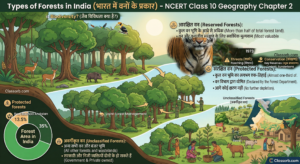
यह विषय परीक्षा में बार-बार आता है। This topic appears repeatedly in examinations. भारत के अधिकांश वन और वन्यजीव संसाधन सरकार के अधीन हैं। Most of India’s forest and wildlife resources are owned or managed by the government.
|
वन का प्रकार Forest Type |
विवरण Description |
|
आरक्षित वन Reserved Forests |
कुल वन भूमि के आधे से अधिक। वन और वन्यजीव संरक्षण के लिए सर्वाधिक मूल्यवान। More than half of total forest land. Most valuable for conservation of forests and wildlife resources. |
|
संरक्षित वन Protected Forests |
कुल वन भूमि का लगभग एक-तिहाई। वन विभाग द्वारा घोषित। आगे कोई क्षरण नहीं होगा। Almost one-third of total forest land. Declared by the Forest Department. Protected from any further depletion. |
|
अवर्गीकृत वन Unclassified Forests |
अन्य सभी वन और बंजर भूमि। सरकारी और निजी व्यक्तियों दोनों के हो सकते हैं। All other forests and wastelands. May belong to both government and private individuals and communities. |
|
राज्य-वार नोट: State-wise Note: मध्य प्रदेश — सबसे अधिक आरक्षित वन — कुल वन भूमि का ७५%। Madhya Pradesh has the largest area under reserved forests — 75% of its total forest area. जम्मू-कश्मीर, आन्ध्र प्रदेश, उत्तराखण्ड, केरल, TN, पश्चिम बंगाल, महाराष्ट्र में भी अधिक आरक्षित वन हैं। J&K, Andhra Pradesh, Uttarakhand, Kerala, Tamil Nadu, West Bengal and Maharashtra also have large percentages of reserved forests. बिहार, हरियाणा, पंजाब, हिमाचल, ओडिशा, राजस्थान में संरक्षित वन अधिक हैं। Bihar, Haryana, Punjab, Himachal Pradesh, Odisha and Rajasthan have a bulk of their forests under protected forests. |
विषय ६ — सामुदायिक संरक्षण Topic 6 — Community Conservation
हम केवल सरकार पर निर्भर नहीं रह सकते। We cannot rely solely on the government. स्थानीय समुदाय (Local Communities) भी वनों को बचाते हैं। Local communities also protect forests. And these ideas are not new — they have existed in India for centuries.
चिपको आन्दोलन Chipko Movement
|
हिमालय में प्रसिद्ध चिपको आन्दोलन चला। The famous Chipko Movement took place in the Himalayas. इसने कई क्षेत्रों में वनों की कटाई को सफलतापूर्वक रोका। It successfully resisted deforestation in several areas. इसने सिद्ध किया कि सामुदायिक वनारोपण अत्यंत प्रभावशाली हो सकता है। It proved that community afforestation can be enormously successful. |
बीज बचाओ आन्दोलन और नवदान्या Beej Bachao Andolan and Navdanya
टिहरी और नवदान्या में बीज बचाओ आन्दोलन ने सिद्ध किया कि In Tehri and Navdanya, the Beej Bachao Andolan demonstrated that
- रासायनिक उर्वरकों के बिना विविध फसलें उगाना संभव है। Diverse crops can be grown without synthetic chemicals.
- यह आर्थिक रूप से भी व्यवहार्य है। This is also economically viable.
- पारंपरिक खेती को पुनः अपनाना चाहिए। Traditional farming methods must be revived.
सरिस्का बाघ आरक्षित — ग्रामीणों ने लड़ाई लड़ी! Sariska Tiger Reserve — Villagers Fought Back!
|
राजस्थान के सरिस्का में ग्रामीणों ने वन्यजीव संरक्षण अधिनियम का उपयोग करते हुए In Sariska, Rajasthan, villagers invoked the Wildlife Protection Act सरकार के साथ मिलकर खनन पर रोक लगाई। and successfully put a stop to mining activities — a major victory. |
भैरोंदेव डाकव ‘सोंचुरी’ — गाँव का अपना जंगल! Bhairodev Dakav ‘Sonchuri’ — The Village’s Own Forest!
राजस्थान के अलवर जिले में पाँच गाँवों के लोगों ने In the Alwar district of Rajasthan, the inhabitants of five villages declared 1,200 hectares जंगल को अपना घोषित कर दिया। अपने नियम बनाए — कोई शिकार नहीं, कोई बाहरी हस्तक्षेप नहीं। Their own rules — no hunting, no outside interference — and they are protecting wildlife against any encroachments.
विषय ७ — संयुक्त वन प्रबंधन (JFM) Topic 7 — Joint Forest Management (JFM)
|
JFM = सरकार + स्थानीय ग्राम समुदाय — मिलकर वनों का प्रबंधन करते हैं। JFM = Government + Local Village Communities managing forests together. यह कार्यक्रम १९८८ से औपचारिक रूप में है जब ओडिशा ने पहला प्रस्ताव पारित किया। This programme has been in formal existence since 1988 when Odisha passed the first resolution. |
JFM कैसे काम करता है? How Does JFM Work?
JFM में स्थानीय ग्राम संस्थाएँ (local village institutions) निम्नीकृत वन भूमि की रक्षा करती हैं। Protect degraded forest land. In return, the communities receive:
- गैर-इमारती वन उत्पाद — जैसे फल, पत्तियाँ, फूल (non-timber forest produce).
- सफल संरक्षण के बाद इमारती लकड़ी के लाभ का हिस्सा। A share of the timber harvested by ‘successful protection’.
|
बड़ी सीख: The Key Lesson: भारत की सबसे बड़ी पर्यावरणीय सीख यह है कि — India’s greatest lesson from environmental reconstruction is that — स्थानीय समुदायों को निर्णय-लेने में केन्द्रीय स्थान मिलना चाहिए। Local communities everywhere have to be involved in some kind of natural resource management. केवल वही गतिविधियाँ स्वीकार करो जो जन-केन्द्रित, पर्यावरण-मित्र और आर्थिक रूप से लाभकारी हों। Accept only those activities that are people-centric, environment-friendly and economically rewarding. |
विषय ८ — पवित्र वन (Sacred Groves) Topic 8 — Sacred Groves
भारत में एक अत्यंत पुरानी परम्परा है — India has a very ancient tradition — Nature Worship। लोगों का मानना था कि प्रकृति की सभी रचनाएँ — पेड़, पहाड़, नदियाँ — ईश्वर की देन हैं, इसलिए इन्हें सुरक्षित रखना ज़रूरी है। People believed that all creations of nature must be protected as they are gifts of God.
|
पवित्र वन (Sacred Groves) = देव वन / देवी के जंगल। Sacred Groves = Dev Van / forests of deities. ये वन के वे टुकड़े हैं जिन्हें बिल्कुल अछूता छोड़ दिया जाता है। These are patches of forest or parts of large forests that have been left untouched by the local people. स्थानीय लोग इनकी रक्षा करते हैं; किसी भी प्रकार का हस्तक्षेप वर्जित है। Any interference with them is strictly banned by the community. |
कौन से पेड़ पवित्र माने जाते हैं? Which Trees Are Considered Sacred?
|
समुदाय Community |
पवित्र वृक्ष Sacred Trees |
|
मुंडा और संथाल (छोटा नागपुर) Mundas & Santhals (Chota Nagpur) |
महुआ (Bassia latifolia) और कदम्ब (Anthocephalus cadamba) Mahua and Kadamba |
|
ओडिशा और बिहार की जनजातियाँ Tribes of Odisha & Bihar |
इमली (Tamarindus indica) Tamarind |
|
सम्पूर्ण भारतीय समाज All of Indian Society |
आम (Mangifera indica) — विवाहों में Mango — used in weddings |
|
सामान्यतः Generally |
पीपल और बरगद — मन्दिरों के पास Peepal and Banyan trees — near temples |
जानवर भी पवित्र! Animals Too Are Sacred!
राजस्थान के बिश्नोई गाँवों में — In the Bishnoi villages of Rajasthan —
- काला हिरण (Blackbuck), नीलगाय (Nilgai) और मोर (Peacock) — community का अभिन्न अंग हैं। / an integral part of the community.
- मन्दिरों के आस-पास बन्दर (Macaque) और लंगूर (Langur) के झुण्ड — प्रतिदिन खिलाए जाते हैं। / fed daily and treated as temple devotees.
|
गौतम बुद्ध (487 B.C.) का उद्धरण: A quote from Gautama Buddha (487 B.C.): “वृक्ष एक विलक्षण जीव है — असीम दयालु और उदार। “The tree is a peculiar organism of unlimited kindness and benevolence, वह अपने पोषण के लिए कुछ नहीं माँगता और अपने जीवन के सभी उत्पाद उदारता से देता है। makes no demand for its sustenance, and extends generously the products of its life activity; वह उन कुल्हाड़ी चलाने वालों को भी छाया देता है जो उसे नष्ट करते हैं।” it affords protection to all beings, offering shade even to the axemen who destroy it.” |
विषय ९ — अभ्यास प्रश्नों के उत्तर Topic 9 — Exercise Answers
बहुविकल्पीय प्रश्न (MCQ) Multiple Choice Question
|
प्रश्न: Question: निम्नलिखित में से कौन-सी संरक्षण रणनीति में समुदाय की सीधी भागीदारी नहीं है? Which of the following conservation strategies does not directly involve community participation? उत्तर: (d) वन्यजीव अभयारण्यों का सीमांकन | Answer: (d) Demarcation of Wildlife Sanctuaries कारण: अभयारण्य की सीमाएँ सरकार तय करती है — सामुदायिक भागीदारी प्रत्यक्ष नहीं होती। Reason: Sanctuary boundaries are determined by the government; community participation is not direct. JFM, Chipko और Beej Bachao Andolan — तीनों community-driven हैं। JFM, Chipko and Beej Bachao Andolan are all community-driven initiatives. |
सुमेलन (Match the Following) Match the Following
|
वन का प्रकार Forest Type |
सही जोड़ Correct Match |
|
आरक्षित वन Reserved Forests |
वन और वन्यजीव संरक्षण के संदर्भ में इन्हें सर्वाधिक मूल्यवान माना जाता है। These are regarded as the most valuable as far as the conservation of forest and wildlife resources is concerned. |
|
संरक्षित वन Protected Forests |
वन भूमि को किसी भी प्रकार के क्षरण से बचाया जाता है। Forest lands are protected from any further depletion. |
|
अवर्गीकृत वन Unclassified Forests |
सरकार और निजी व्यक्तियों और समुदायों दोनों से संबंधित अन्य वन और बंजर भूमि। Other forests and wastelands belonging to both the government and private individuals and communities. |
Answers in About 30 Words
|
Q1: जैव विविधता क्या है? यह मानव जीवन के लिए क्यों महत्त्वपूर्ण है? What is biodiversity? Why is it important for human lives? उत्तर: किसी क्षेत्र में पाए जाने वाले सभी पौधों, जानवरों और सूक्ष्म-जीवों की विविधता को जैव विविधता कहते हैं। यह पारिस्थितिक सन्तुलन, खाद्य सुरक्षा और औषधीय संसाधनों के लिए अत्यंत ज़रूरी है। Ans: The variety of all plants, animals and micro-organisms found in an area is called biodiversity. It is important for maintaining ecological balance, food security and medicinal resources. |
Q2: मानवीय गतिविधियों ने वनस्पतियों और जीवों की कमी को कैसे प्रभावित किया है? How have human activities affected the depletion of flora and fauna?उत्तर: वनों की कटाई, शिकार, प्रदूषण, खनन और नगरीकरण ने आवासों को नष्ट किया। कृषि रसायनों ने मिट्टी और जल को प्रदूषित किया। परिणाम: अनेक प्रजातियाँ लुप्त हो रही हैं या संकटग्रस्त हो गई हैं। Ans: Deforestation, poaching, pollution, mining and urbanisation have destroyed habitats. Agricultural chemicals have polluted soil and water. As a result, many species have become extinct or are endangered. |
१२० शब्दों में उत्तर Answers in About 120 Words
Q1: भारत में समुदायों ने वनों और वन्यजीवों को कैसे संरक्षित किया है? How have communities conserved forests and wildlife in India?उत्तर: भारत में समुदायों ने अनेक तरीकों से वनों की रक्षा की है। पवित्र वन की परम्परा से कुँवारे जंगल सुरक्षित हैं। चिपको आन्दोलन ने वनों की कटाई रोकी। सरिस्का में ग्रामीणों ने खनन के विरुद्ध संघर्ष किया। बीज बचाओ आन्दोलन ने पारंपरिक खेती वापस लाई। राजस्थान में भैरोंदेव डाकव सोंचुरी में लोगों ने स्वयं १,२०० हेक्टेयर जंगल घोषित किया और अपने नियम बनाए। JFM कार्यक्रम में स्थानीय संस्थाएँ निम्नीकृत वनों की रक्षा करती हैं। इन सभी उदाहरणों से स्पष्ट है कि सामुदायिक भागीदारी सरकारी प्रयासों से भी अधिक प्रभावी हो सकती है। Ans: Communities in India have conserved forests through numerous means. The Sacred Groves tradition has kept virgin forests intact. The Chipko Movement halted deforestation. Villagers in Sariska fought against mining. The Beej Bachao Andolan revived traditional agriculture. In Rajasthan, the people of five villages declared 1,200 hectares of forest as their own — the Bhairodev Dakav Sonchuri — with their own rules. JFM institutions protect degraded forests in return for non-timber benefits. These examples clearly demonstrate that community participation can be even more effective than governmental efforts alone. |
Forest and Wildlife Resources Class 10 Easy Audio Notes Part 4
विषय १० — परीक्षा त्वरित पुनरावृत्ति Topic 10 — Quick Revision for Exams
|
विषय Topic |
मुख्य बिन्दु Key Point |
|
१९७२ का अधिनियम 1972 Act |
शिकार और व्यापार प्रतिबंधित; संरक्षित प्रजाति सूची; राष्ट्रीय उद्यान बने। Hunting and trade banned; protected species list published; National Parks established. |
|
प्रोजेक्ट टाइगर कब? Project Tiger — When? |
१९७३ में — बाघ ५५,०००→१,८२७ हो गए थे। 1973 — tiger numbers had fallen from 55,000 to 1,827. |
|
आरक्षित वन Reserved Forest |
५०% से अधिक वन भूमि; संरक्षण के लिए सर्वाधिक मूल्यवान। More than 50% of forest land; most valuable for conservation. |
|
JFM कब? JFM — When? |
१९८८ से — ओडिशा का पहला प्रस्ताव। 1988 — Odisha’s first resolution. |
|
पवित्र वन Sacred Groves |
देव वन — जनजातियों द्वारा संरक्षित अछूते वन। Dev Van — untouched forest patches protected by tribal communities. |
|
चिपको आन्दोलन Chipko Movement |
हिमालय में; वनों की कटाई सफलतापूर्वक रोकी। In the Himalayas; successfully resisted deforestation. |
|
|
बीज बचाओ Beej Bachao Andolan : टिहरी-नवदान्या; पारंपरिक बीज + कोई रसायन नहीं। Tehri-Navdanya: traditional seeds + no synthetic chemicals. |
|
भैरोंदेव डाकव Bhairodev Dakav |
अलवर, राजस्थान; ५ गाँव; १,२०० हेक्टेयर; अपने नियम। Alwar, Rajasthan; 5 villages; 1,200 hectares; their own rules. |
|
MP में वन Forests in MP |
सबसे अधिक आरक्षित वन — ७५% कुल वन क्षेत्र। Largest area under reserved forests — 75% of total forest area. |
|
बाघ के खतरे Tiger Threats |
शिकार, आवास हानि, शिकार-आधार, मानव जनसंख्या, दवाइयाँ। Poaching, habitat loss, prey base reduction, human population, and medicines. |
Forest and Wildlife Resources Class 10 Easy PDF Notes ( E.M)
Forest and Wildlife Resources Class 10 Easy PDF Notes (H.M)
Teacher’s Suggestion: Board Exam Ki Taiyari Ka Asan Tarika
Agar aap Forest and Wildlife Resources Class 10 Easy PDF and Voice Notes dhund rahe hain, toh ye resource aapke liye best hai. Ek teacher hone ke nate mera sujhab hai ki ratne ke bajaye concepts ko samjhein. Is PDF notes mein humne 30 MCQs, 20 Fill in the Blanks, aur 10 Matching diye hain jo aapke base ko strong karenge.
Saath hi, 10 FAQs, 30 Short Q&A, aur 20 Long Q&A ko 100% Natural Teacher Language aur British English mein taiyar kiya gaya hai, jinka meaning bahut simple hai. Voice notes ki madad se aap mushkil topics ko kahin bhi sunkar yaad kar sakte hain. Ye complete package board exams mein 100% success dilane mein aapki madad karega.
Class 10 Geography | Chapter 2 | Forest and Wildlife Resources
Hindi Devanagari + British English Mix Notes | NCERT Reprint 2026-27