

Power Sharing Class 10 Notes Story-Based Explanation
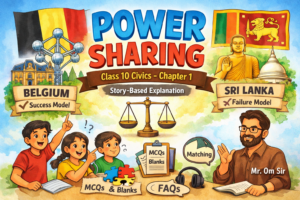
Story-Based Notes for CBSE & State Boards (UPPSC / UP Board)
Characters in our Story
|
Arjun Delhi का लड़काबहुत जिज्ञासु |
Priya Lucknow की लड़कीहमेशा example देती है |
Rohan Jaipur का लड़काहमेशा confused |
Sonu Patna का लड़काfunny सवाल पूछता है |
🎓 Teacher: Mr Om Sikarwar
🌟 Scene 1 – School की छत पर एक बातचीत
Monday की सुबह है। School की छत पर चारों दोस्त – Arjun, Priya, Rohan और Sonu – Mr. Om Sikarwar के साथ बैठे हैं। Sir ने एक सवाल पूछा।
Sir Om Sikarwar: “बच्चों, मान लो तुम चारों का एक group project है। अगर सिर्फ Arjun ही सारे decisions ले, तो क्या होगा?”
Sonu: “Sir, बाकी तीनों तो बस बैठे रहेंगे! और फिर Arjun जो चाहे करता रहेगा – भले ही गलत हो।”
Priya: “Exactly! और अगर Arjun कोई बड़ी गलती करे, तो पूरा project बर्बाद हो जाएगा।”
Sir Om Sikarwar: “बिल्कुल सही! यही बात देशों के लिए भी लागू होती है। इसीलिए Democracy में Power-Sharing ज़रूरी है।”
|
Power-Sharing का मतलब है – सत्ता को अलग-अलग हाथों में बाँटना, ताकि कोई एक व्यक्ति या समूह सब कुछ अपने हाथ में न ले ले। |
◆ Power-Sharing क्यों ज़रूरी है?
Mr. Om Sikarwar ने समझाया कि Democracy में सत्ता का बँटवारा दो कारणों से ज़रूरी है:
|
⚖️ Power-Sharing के दो बड़े कारण |
|
✔ Prudential (बुद्धिमानी का कारण): अगर सत्ता एक जगह जमा हो जाए, तो conflict और अस्थिरता बढ़ती है। Power बाँटने से देश स्थिर रहता है। |
|
✔ Moral (नैतिक कारण): Democracy में नागरिकों का हक़ है कि वे शासन में भागीदार बनें। यह नैतिक रूप से सही है। |
Rohan: “Sir, लेकिन क्या Power-Sharing से decisions लेने में देरी नहीं होती?”
Sir Om Sikarwar: “Rohan, हाँ, थोड़ी देरी हो सकती है – लेकिन इससे decisions ज़्यादा अच्छे होते हैं। अकेले एक इंसान से गलतियाँ ज़्यादा होती हैं।”
Sonu: “Sir, जैसे Cricket team में एक ही player नहीं खेलता, सब मिलकर खेलते हैं!”
Sir Om Sikarwar: “बहुत अच्छा example, Sonu! यही बात देश में भी होती है।”
🇧🇪 Scene 2 – Belgium की कहानी
Sir ने map निकाला और Belgium की कहानी शुरू की।
Sir Om Sikarwar: “अच्छा बच्चों – Belgium एक छोटा सा यूरोपीय देश है, Haryana से भी छोटा। पर इसकी population बहुत mixed है।”
Arjun: “Mixed मतलब – अलग-अलग भाषा वाले लोग?”
Sir Om Sikarwar: “बिल्कुल! Belgium में तीन तरह के लोग हैं।”
|
Dutch (Flemish) |
French (Walloon) |
German |
|
59% लोग(Dutch बोलते हैं) |
40% लोग(French बोलते हैं) |
1% लोग(German बोलते हैं) |
Priya: “Sir, तो Brussels – जो Belgium की capital है – वहाँ क्या होता था?”
Sir Om Sikarwar: “Brussels में 80% लोग French बोलते हैं। लेकिन पूरे देश में Dutch वाले majority हैं। अब यहाँ problem शुरू हुई।”
Rohan: “कैसी problem, Sir?”
Sir Om Sikarwar: “Dutch majority होने के बावजूद, French-speaking लोग Brussels में ज़्यादा powerful थे – ज़्यादा पैसे थे, government में ज़्यादा posts थे। Dutch लोगों को लगा – ये नाइंसाफ़ी है!”
Sonu: “Sir, यह तो वैसा ही है जैसे हमारी class में 30 लड़के हों, लेकिन class monitor की सुने 5 लड़कियाँ!”
Arjun: “Sonu, यह example थोड़ा अजीब है लेकिन बात समझ आई!”
◆ Belgium का Smart Solution – Power-Sharing Model
Sir ने आगे बताया कि Belgium के leaders बहुत smart थे। उन्होंने 1970-1993 के बीच अपना Constitution कई बार बदला।
|
Belgium के Power-Sharing के 4 मुख्य नियम |
|
✔ Central Government में Dutch और French के equal ministers – किसी एक group के पास majority नहीं। |
|
✔ State Governments को Central Government के अधीन नहीं रखा गया – दोनों independent हैं। |
|
✔ Brussels में equal representation – Dutch और French दोनों को बराबर power। |
|
✔ Community Government – भाषा के आधार पर तीसरा स्तर, जो culture, education और language के मामले देखती है। |
|
🎯 Belgium ने सिखाया: जब देश में अलग-अलग भाषा-संस्कृति के लोग हों, तो सब को power में हिस्सा देना ज़रूरी है – वरना देश टूट सकता है! |
Scene 3 – Sri Lanka की दुखद कहानी
अब Sir ने Sri Lanka का map निकाला। सब बच्चे ध्यान से सुनने लगे।
Sir Om Sikarwar: “अच्छा बच्चों, Sri Lanka को जानते हो? यह एक island country है – दक्षिण भारत के पास। यहाँ भी दो बड़े समूह हैं।”
Arjun: “कौन से Sir?”
Sir Om Sikarwar: “पहला – Sinhala (74% लोग, Buddhist), और दूसरा – Tamil (18% लोग, Hindu या Muslim)। Sri Lankan Tamils और Indian Tamils।”
Priya: “Sir, भारत में भी Tamils हैं, तो क्या connection है?”
Sir Om Sikarwar: “हाँ Priya, कुछ Tamils के पूर्वज colonial period में India से Sri Lanka गए थे काम करने के लिए।”
◆ Majoritarianism क्या है? – एक गलत नीति
Sir Om Sikarwar: “1948 में Sri Lanka आज़ाद हुआ। Sinhala majority थे, तो उनकी government बनी। अब उन्होंने कुछ ऐसे decisions लिए जो Tamils के खिलाफ थे।”
Rohan: “क्या decisions Sir?”
Sir Om Sikarwar: “सुनो:”
|
😡 Sri Lanka की Majoritarian नीतियाँ – जो गलत थीं |
|
✔ 1956 – एक Act पास हुआ: सिर्फ Sinhala ही official language। Tamil को ignore किया गया। |
|
✔ Universities और Government jobs में Sinhala को preference मिली। |
|
✔ Government ने Buddhism को state religion का दर्जा दिया – Tamils की धार्मिक भावनाएँ आहत हुईं। |
|
✔ Tamils के साथ हर जगह भेदभाव – नौकरी, शिक्षा, culture सब में। |
Sonu: “Sir, यह तो बिल्कुल गलत था! अगर मेरे घर में 4 लोग हैं और 3 ने decide कर लिया कि चौथे को खाना नहीं मिलेगा – तो यह तो बेइज़्ज़ती है!”
Sir Om Sikarwar: “Exactly, Sonu! यही Majoritarianism है – majority का अहंकार। और इसका नतीजा बहुत बुरा हुआ।”
Civil War – जब देश जलने लगा
Sir की आवाज़ गंभीर हो गई।
Sir Om Sikarwar: “Tamils ने पहले शांतिपूर्ण तरीके से माँग की – हमें भी equal rights दो। लेकिन सरकार ने नहीं माना। तो धीरे-धीरे extremist groups उठे।”
Arjun: “जैसे LTTE?”
Sir Om Sikarwar: “हाँ! Liberation Tigers of Tamil Eelam – जो North और East Sri Lanka में अलग Tamil Eelam देश मांग करने लगे। इससे civil war छिड़ गया – दशकों तक चला। 2009 में यह war खत्म हुआ लेकिन तब तक हज़ारों लोग मारे जा चुके थे।”
Priya: “Sir, अगर शुरू में ही power share करते, तो यह नौबत न आती।”
Sir Om Sikarwar: “Bilkul sahi, Priya! यही हम Belgium और Sri Lanka से सीखते हैं – एक ने Power-Sharing अपनाई, बच गया। दूसरे ने Majoritarianism अपनाई, बर्बाद हो गया।”
|
⚠️ Majoritarianism = Majority group का बाकी groups पर ज़ुल्म। यह democracy नहीं, बल्कि अत्याचार है। Sri Lanka इसकी सबसे बड़ी मिसाल है। |
🏛️ Scene 4 – Power-Sharing के 4 तरीके Power Sharing Class 10 Notes
अब Sir ने whiteboard पर लिखा – ‘Power-Sharing के 4 Forms’ – और बच्चों से पूछा।
Sir Om Sikarwar: “बताओ – अगर एक देश में power किसी एक हाथ में न हो, तो कैसे बाँटी जाए?”
Rohan: “Sir, मुझे नहीं पता।”
Sonu: “Sir, lottery से बाँट दो!”
Sir Om Sikarwar: “हाहाहा! नहीं Sonu। Political Science में इसके 4 तरीके हैं। ध्यान से सुनो।”
◆ Form 1 – Horizontal Distribution (Organs of Government में बँटवारा)
यह वह तरीका है जिसमें एक ही level पर power को अलग-अलग organs में बाँटा जाता है। जैसे:
|
🔴 Legislature 🔵 Executive 🟢 Judiciary |
|
✔ Legislature (संसद / विधानसभा) – कानून बनाती है। |
|
✔ Executive (सरकार / मंत्री) – कानून को लागू करती है। |
|
✔ Judiciary (Courts / न्यायालय) – कानून की व्याख्या और न्याय करती है। |
|
✔ तीनों एक-दूसरे पर check रखते हैं – इसे Checks and Balances कहते हैं। |
Arjun: “Sir, यह तो हमारे India में भी है! Parliament, PM और Supreme Court।”
Sir Om Sikarwar: “Perfect, Arjun! यही Separation of Powers है।”
◆ Form 2 – Vertical Distribution (Federal System – Federalism)
यह वह तरीका है जिसमें power को अलग-अलग levels पर बाँटा जाता है – जैसे Central, State और Local।
|
🗺️ Federal System में Power के 3 स्तर |
|
✔ Central Government – पूरे देश के लिए। (National Defence, Foreign Policy) |
|
✔ State Governments – राज्य के मामले। (Police, Agriculture, Health) |
|
✔ Local Bodies – Panchayat और Municipality। (Roads, Schools, Water) |
Priya: “Sir, Belgium में तो यही हुआ! State Governments को Central के बराबर Power मिली।”
Sir Om Sikarwar: “बिल्कुल! India में भी यही system है।”
◆ Form 3 – Power-Sharing Among Social Groups
यह तरीका समाज के अलग-अलग groups को power में भागीदारी देता है।
|
👥 Social Groups को Power में हिस्सा |
|
✔ Community Government – Belgium में भाषाई groups को separate government। |
|
✔ India में SC, ST, OBC के लिए Reservations – legislature और government jobs में। |
|
✔ Minority groups को protection और representation। |
Sonu: “Sir, यानी India में जो reservation है, वो भी Power-Sharing का एक तरीका है!”
Sir Om Sikarwar: “बहुत अच्छा Sonu! Exactly. इसे ‘Community Government’ का principle कहते हैं।”
◆ Form 4 – Power-Sharing Among Political Parties, Pressure Groups & Movements
यह तरीका political competition के ज़रिए होता है।
|
🗳️ Political Competition से Power-Sharing |
|
✔ Pressure Groups – Labour unions, Student unions, Business groups – ये सरकार पर दबाव डालते हैं। |
|
✔ Political Parties – Opposition party सरकार को check करती है। |
|
✔ Movements – जैसे women’s movement, environment movement। |
|
✔ Coalition Government – जब दो या ज़्यादा parties मिलकर सरकार बनाती हैं। |
Rohan: “Sir, India में तो बहुत बार coalition government बनी है!”
Sir Om Sikarwar: “हाँ Rohan! NDA, UPA – ये सब coalition थे। यही Democracy की खूबसूरती है।”
|
📚 Power-Sharing के 4 Forms: (1) Organs में – Legislature/Executive/Judiciary (2) Levels में – Federal System (3) Social Groups में – Reservation/Community Govt. (4) Political Parties/Pressure Groups में – Competition & Coalition |
💎 Scene 5 – Power-Sharing क्यों अच्छी है? (Revision)
Class का अंत हो रहा था। Sir ने बच्चों से summary माँगी।
Sir Om Sikarwar: “अच्छा! आज हमने बहुत कुछ सीखा। अब बताओ – Power-Sharing क्यों ज़रूरी है? दो reasons?”
Arjun: “Sir, पहला – Prudential reason: अगर power एक जगह हो, तो गलती होने पर सब बर्बाद हो जाएगा। बाँटने से risk कम होता है।”
Priya: “दूसरा – Moral reason: Democracy में हर नागरिक को भागीदारी का हक़ है। यह उनका अधिकार है।”
Sir Om Sikarwar: “Excellent! और Sri Lanka से क्या सीखा?”
Sonu: “Sir, जब majority ने minority को ignore किया, तो civil war हुआ – देश तबाह हो गया।”
Sir Om Sikarwar: “और Belgium से?”
Rohan: “Belgium ने Power-Sharing अपनाई – सब groups को equal rights दिए – और देश एक रहा।”
Sir Om Sikarwar: “Bilkul perfect! शाबाश चारों को!”
◆ Belgium vs Sri Lanka – Quick Comparison
|
पहलू |
🇧🇪 Belgium |
🇱🇰 Sri Lanka |
|
Groups |
Dutch (59%), French (40%), German (1%) |
Sinhala (74%), Tamil (18%), Christina (7 %) |
|
नीति |
Power-Sharing – सबको बराबर हिस्सा |
Majoritarianism – Sinhala को सब, Tamils को कुछ नहीं |
|
Language |
सभी भाषाओं को equal दर्जा |
सिर्फ Sinhala official |
|
नतीजा |
देश एक रहा, European Union का हिस्सा |
Civil War, हज़ारों मौतें, 2009 तक लड़ाई |
|
सबक |
Accommodation – मिल-जुलकर चलो |
Majoritarianism – देश तोड़ता है |
📝 Exam Corner – Important Questions & Answers
CBSE Board, UP Board, UPPSC – सभी के लिए ज़रूरी प्रश्न
◆ 1 Mark Questions (MCQ / Fill in the Blank)
Q1. Belgium किस देश से छोटा है? — Haryana से
Q2. Belgium में Dutch-speaking लोगों का % क्या है? — 59%
Q3. Sri Lanka में Sinhala का % क्या है? — 74%
Q4. Sri Lanka में कौन सा act 1956 में पास हुआ? — Sinhala Only Act
Q5. Power-Sharing के Prudential reason का मतलब? — बुद्धिमानी से conflict कम करना
Q6. LTTE का full form? — Liberation Tigers of Tamil Eelam
Q7. Belgium में Community Government किन मामलों को देखती है? — Culture, Education, Language
Q8. Checks and Balances किस form of power-sharing में है? — Horizontal Distribution
◆ 3-4 Mark Questions from Power Sharing Class 10
- Belgium का Power-Sharing model क्यों सफल रहा?
Ans: Belgium के leaders ने 1970-1993 के बीच Constitution में बदलाव किए। उन्होंने Dutch और French दोनों को Central Government में equal ministers दिए। Brussels में equal representation दी। State Governments को Central के बराबर power दी। एक अलग Community Government बनाई जो language, culture और education देखती है। इस model से civil war रुका और देश एकजुट रहा। यह accommodation का सबसे अच्छा example है।
- Sri Lanka में Majoritarianism से क्या नुकसान हुआ?
Ans: Sri Lanka 1948 में आज़ाद हुआ। Sinhala majority ने Tamil minority के साथ भेदभाव किया। 1956 में Sinhala Only Act पास किया, Tamils को नौकरी और education में unequal treatment मिली। इससे Tamils में असंतोष बढ़ा, LTTE जैसे extreme groups उठे। दशकों तक civil war चला, हज़ारों लोग मारे गए। यह Majoritarianism का सबसे बड़ा नुकसान है – minority को ignore करने से देश कमज़ोर होता है।
◆ 5 Mark Questions (Long Answer)
- Power-Sharing के चार forms कौन से हैं? उदाहरण सहित समझाइए।
Ans: (1) Horizontal Distribution – Power को Legislature, Executive और Judiciary में बाँटा जाता है। India में Parliament, PM और Supreme Court इसके उदाहरण हैं। (2) Vertical / Federal Distribution – Power को Central, State और Local Government में बाँटा जाता है। India का Federal System इसका example है। (3) Social Group Distribution – SC, ST, OBC को reservation, Belgium में Community Government। (4) Political Party / Pressure Group Distribution – Coalition Government, Labour Unions, Opposition party – ये सब power में check और balance रखते हैं। इन चारों forms से democracy मज़बूत होती है।
|
🌟 परीक्षा Tip: Belgium और Sri Lanka की तुलना हमेशा exam में आती है। Belgium = Power-Sharing = Success. Sri Lanka = Majoritarianism = Civil War. यह याद रखो! |
📖 Important Terms – आसान भाषा में
|
शब्द / Term |
मतलब (Easy Hindi) |
|
Power-Sharing |
सत्ता का बँटवारा – अलग-अलग हाथों में power देना |
|
Majoritarianism |
majority का अहंकार – minority को ignore करना |
|
Prudential Reason |
बुद्धिमानी का कारण – conflict कम करने के लिए power बाँटना |
|
Moral Reason |
नैतिक कारण – हर नागरिक को भागीदारी का अधिकार |
|
Ethnic |
जाति/भाषा/संस्कृति के आधार पर समूह |
|
Checks and Balances |
एक-दूसरे पर नज़र रखना – कोई organ unlimited power न ले |
|
Federalism |
power को Centre और States में बाँटना |
|
Community Government |
Belgium में भाषाई group की अलग government |
|
Coalition Government |
दो या ज़्यादा parties मिलकर सरकार बनाना |
|
Accommodation |
अलग-अलग groups को मिलाकर साथ चलना |
|
Civil War |
एक ही देश के लोगों के बीच युद्ध |
|
LTTE |
Liberation Tigers of Tamil Eelam – Sri Lanka का Tamil extremist group |
Power Sharing Class 10 Notes MCQ
|
■■■ Teacher’s Note: Read every option carefully before choosing. In MCQs, two options often look similar. The key is to find the BEST answer, not just a correct-sounding one. |
Q1. Which of the following best describes ‘Power-Sharing’ in a democracy?
- All power is held by the elected government
- Power is distributed among different organs, levels and groups
- The majority community holds all political authority
- Only the judiciary has real power in a democracy
|
✔ Correct Answer: (B) | Explanation: Power-sharing means distributing power among different organs of government, levels of administration, and various social groups so that no single entity becomes all-powerful. |
Q2. Belgium is smaller in area than which Indian state?
- Punjab
- Kerala
- Haryana
- Goa
|
✔ Correct Answer: (C) | Explanation: Belgium has an area of about 30,528 sq km, which is smaller than Haryana (44,212 sq km). This is a standard comparison used in the NCERT textbook. |
Q3. What percentage of Belgium’s total population speaks Dutch?
- 40%
- 50%
- 59%
- 70%
|
✔ Correct Answer: (C) | Explanation: Approximately 59% of Belgium’s population lives in the Flemish region and speaks Dutch. About 40% live in the Wallonia region and speak French. |
Q4. In which city of Belgium do French-speaking people form a majority, despite being a minority in the country?
- Antwerp
- Brussels
- Ghent
- Bruges
|
✔ Correct Answer: (B) | Explanation: Brussels, the capital city, has about 80% French-speaking residents, though French speakers are only 40% of Belgium’s total population. |
Q5. Which type of government did Belgium create specifically to deal with cultural and linguistic matters?
- Federal Government
- State Government
- Community Government
- Coalition Government
|
✔ Correct Answer: (C) | Explanation: Belgium created a unique ‘Community Government’ — a third tier of government elected by people belonging to one language community, regardless of where they live. |
Q6. Sri Lanka became an independent country in which year?
- 1945
- 1947
- 1948
- 1950
|
✔ Correct Answer: (C) | Explanation: Sri Lanka (then Ceylon) gained independence from British rule in 1948, the year after India’s independence. |
Q7. The Sri Lanka Act of 1956 recognised which language as the sole official language?
A. Tamil
- English
- Pali
- Sinhala
|
✔ Correct Answer: (D) | Explanation: The ‘Sinhala Only Act’ of 1956 recognised Sinhala as the sole official language, completely disregarding Tamil, which was deeply resented by the Tamil community. |
Q8. What does ‘Majoritarianism’ mean in the context of Sri Lanka?
- Giving equal rights to all communities
- The belief that the majority community should rule without sharing power
- A federal system of government
- Giving special rights to minorities
|
✔ Correct Answer: (B) | Explanation: Majoritarianism is the belief that the majority community has the right to rule a country as it wishes, often ignoring the needs and rights of minorities. |
Q9. LTTE stands for:
- Liberation Tigers of Tamil Eelam
- Liberation Tamils of Tamil Eelam
- Lankan Tigers of Tamil Elite
- Liberation Tigers of Tamil Era
|
✔ Correct Answer: (A) | Explanation: LTTE — Liberation Tigers of Tamil Eelam — was the militant organisation that fought for a separate Tamil homeland called ‘Tamil Eelam’ in northern and eastern Sri Lanka. |
🎓 Best of Luck! – Teacher: Om Sikarwar | classORB.com 🎓
Power Sharing Class 10 Notes Story-Based Explanation ( E.M) Free Download
Power Sharing Class 10 Notes Story-Based Explanation ( H.M) Free Download