


Class 11 Dairy Farmer Unit 3 Notes & Solved Exercises (2026)
Dairy Farmer-I | Class XI
UNIT 3 — Establishing Livestock within Accommodation
Story-Style Notes | Teacher: Om Sikarwar
studentscareerguru.com
Introduction — चलिए, आज की क्लास शुरू करते हैं!
Class 11 Dairy Farmer Unit 3 Notes & Solved Exercises (2026) के इस स्पेशल लेसन में आप सभी का स्वागत है, जहाँ आज हम सीखेंगे कि डेयरी फार्म को सही ढंग से कैसे चलाया जाता है।
नमस्ते मेरे प्यारे बच्चों! कैसे हैं आप सब?
आज हम Informatics Practices और बाकी विषयों की तरह ही एक बहुत ही ज़रूरी और दिलचस्प टॉपिक शुरू करने जा रहे हैं। अगर आप कक्षा 11वीं के छात्र हैं और Dairy Farmer (Vocational Course) की तैयारी कर रहे हैं, तो आज की ये क्लास आपके लिए बहुत खास होने वाली है।
आज हम पढ़ेंगे Unit 3: Establishing Livestock within Accommodation।
अब आप सोच रहे होंगे कि सर, ये नाम तो बड़ा भारी-भरकम है, इसका मतलब क्या है? तो बच्चों, आसान भाषा में कहें तो आज हम सीखेंगे कि एक डेयरी फार्म पर पशुओं (Livestock) को सही तरीके से कैसे रखा जाता है, उनकी सेहत का ख्याल कैसे रखते हैं, और फार्म पर काम करने वाले लोगों की सुरक्षा (Safety) कैसे की जाती है।
अक्सर बच्चे कहते हैं कि सर, किताबी भाषा समझ नहीं आती! इसलिए, आपके Om Sir आज इन नोट्स को एक कहानी (Story-Style) के रूप में लेकर आए हैं। इस कहानी में मेरे साथ Arjun, Priya और Sonu जैसे स्टूडेंट्स भी होंगे, जो आपके मन में आने वाले सवाल मुझसे पूछेंगे।
इस पोस्ट में आपको क्या-क्या मिलेगा?
-
Short & Simple Notes: जो आसानी से याद हो जाएं।
-
Practical Knowledge: पशुओं की बीमारी और Vaccination की पूरी जानकारी।
-
Safety Tips: फार्म वर्कर्स के लिए PPE किट क्यों ज़रूरी है।
-
Solved Exercises: NCERT और बोर्ड परीक्षाओं के लिए पक्के सवाल-जवाब।
तो अपनी नोटबुक निकाल लीजिए और चलिए चलते हैं Class Orb की इस डिजिटल क्लास में, जहाँ पढ़ाई बोझ नहीं, एक मज़ेदार सफर है!
|
Om Sir: Good morning, class! आज हम शुरू करते हैं Unit 3 — ‘Establishing Livestock within Accommodation’. इस unit में हम सीखेंगे कि dairy farm पर animals की देखभाल कैसे करें, उन्हें transport कैसे करें, farm workers को safe कैसे रखें, और manure का proper disposal कैसे करें। |
|
Arjun Sir, यह तो बहुत interesting topic है! मेरे गाँव में एक dairy farm है, लेकिन वहाँ कोई proper system नहीं है। |
|
Om Sir: Exactly, Arjun! Proper management से milk production बढ़ती है और animals healthy रहते हैं। चलो शुरू करते हैं! |
Session 1 — Standard Practices for Maintaining Health of Cattle
गायों की health check कैसे करें?
|
Om Sir: Farm supervisor को हर रोज़ जानवरों को ध्यान से observe करना चाहिए। कोई भी change in routine — जैसे खाना कम खाना या अजीब behaviour — illness की निशानी हो सकती है। |
Symptoms of Illness in Animals (बीमारी के लक्षण)
|
|
Priya (Delhi): Sir, अगर कोई जानवर बीमार लगे तो क्या करें? |
|
Om Sir: Priya, बहुत अच्छा question! इसके लिए एक proper process follow करते हैं: |
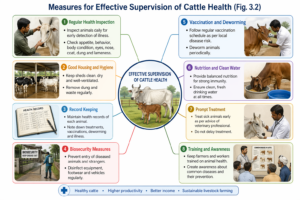
Measures for Effective Supervision of Cattle Health (Fig. 3.2)
|
Vaccination — बीमारी से पहले सुरक्षा!
|
Rohan (Pune): Sir, vaccination क्या होता है? और यह क्यों ज़रूरी है? |
|
Om Sir: Rohan, vaccine एक fluid होता है जिसमें attenuated (कमज़ोर) या killed micro-organisms होते हैं। यह जानवर के body में inject होता है तो उसकी immunity बन जाती है। याद रखो — vaccines हमेशा HEALTHY animals को ही दिए जाते हैं! |
Major diseases requiring vaccination (Fig. 3.3): Foot and Mouth Disease (FMD), Haemorrhagic Septicaemia (HS), Black Quarter (BQ), Anthrax, Brucellosis
|
Vaccine |
Age of Primary Vaccination |
Booster |
Revaccination |
|---|---|---|---|
|
FMD Vaccine |
4–6 months |
9 months after primary |
Annually |
|
HS Vaccine |
6 months |
— |
Annually |
|
BQ Vaccine |
6 months |
— |
Annually |
|
Anthrax Vaccine |
6 months |
— |
Annually (endemic areas) |
|
Brucella Vaccine |
4–8 months (female calf only) |
— |
— |
Vaccination Record में क्या लिखते हैं?
|
Session 2 — Safety Measures for Farm Workers & Disposal of Manure
PPE — Personal Protective Equipment क्या होता है?
|
Sonu (Bhopal): Sir, PPE का full form क्या है? |
|
Om Sir: Sonu, PPE = Personal Protective Equipment. यह dairy workers को injuries, chemicals, और diseases से बचाता है। Farm पर काम करते समय — चाहे milking हो, feeding हो या cleaning — PPE पहनना अनिवार्य है! |
Common PPE for Dairy Workers (सामान्य सुरक्षा उपकरण)
|
Safety Measures during Farm Activities
|
Farm पर Chemical use के safety rules:
|
Risks associated with dairy workers (3 main categories): (i) Transmission of diseases (ii) Problems related to handling of animals (iii) Problems of the working environment
|
Common Problem |
Remedial Measure (उपाय) |
|---|---|
|
Damage to clothing |
Wear comfortable overalls without lengthy projections; always use waterproof footwear |
|
Burns and scalds |
Cover hair; wear gloves while handling hot items, insecticides, chemicals |
|
Dust inhalations |
Wear face masks to filter out dust |
|
Cuts on fingers/wrists |
Wear gloves |
Collection of Manure and Washing
|
Arjun (Lucknow): Sir, manure को कैसे हटाते हैं? क्या रोज़ करना पड़ता है? |
|
Om Sir: हाँ, Arjun! Solid manure को animal shed से दिन में दो बार हटाया जाता है। Liquid manure (slurry) को water hose pipe से flush किया जाता है। Manure को animal house से करीब 100 metres दूर manure pit में डाला जाता है जहाँ bacteria उसे धीरे-धीरे manure में बदलते हैं। |
Manure Pit के बारे में ज़रूरी बातें:
|
Effective Disposal and Utilisation of Manure
|
Priya (Delhi): Sir, manure को dispose करने के क्या-क्या तरीके हैं? |
|
Om Sir: Priya, बहुत अच्छा! Manure को soil में apply करने के कई methods हैं — चलो एक-एक करके समझते हैं: |
|
Efficient Ways of Disposing Manure (Fig. 3.9)
|
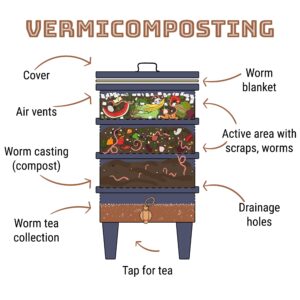
Composting (खाद बनाना)
|
Rohan (Pune): Sir, composting और FYM में क्या difference है? |
|
Om Sir: Rohan, FYM naturally बनती है जब dung, urine, leftover feed slow decomposition से गुज़रता है। Composting एक controlled process है जिसमें micro-organisms organic matter को decompose करते हैं। यह aerobic (with oxygen) या anaerobic (without oxygen) हो सकती है। |
|
Composting के फायदे (Advantages of Aerobic Composting):
|
|
Mature Compost की पहचान कैसे करें?
|
Vermicomposting (केंचुए से खाद)
|
Sonu (Bhopal): Sir, vermicompost तो मैंने नाम सुना है, लेकिन यह कैसे बनती है? |
|
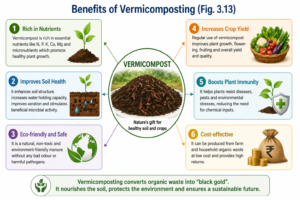
Om Sir: Sonu, vermicomposting में earthworms (केंचुए) organic waste को humus-like material में बदलते हैं। 1 kg worms, 1 kg organic matter daily खा सकते हैं! इनके excreta (castings) nitrogen, phosphorus, calcium, magnesium से भरपूर होते हैं। Common species: Eisenia foetida और Lumbricus rubellus (red worm)। |
Benefits of Vermicomposting (Fig. 3.13)
|
|
Earthworm Castings की खासियत:
|
Biogas — Slurry Manure का Bonus!
Biogas non-poisonous, characteristic odour वाली gas है। Air के साथ mix होने पर यह non-luminous blue flame से जलती है — बिना smoke के, Biogas burns easily but controlled inflammability होती है (जलने वाली गैस)। Uses: cooking, lighting, power generation। Biogas-spent slurry, FYM से बेहतर होती है क्योंकि यह well digested होती है और nutrient content high होता है।
Establishing Suitable Environmental Conditions in a Dairy Farm
|
Om Sir: Farm animals homoeothermic होते हैं — यानी इनके body temperature में बहुत कम changes होते हैं। लेकिन metabolic heat atmosphere में जाती है। अगर animal house में heat और moisture accumulate हो जाए तो animals को stress होता है जो diseases तक ले जाती है। |
|
Environmental Condition |
Optimum Value / Requirement |
|---|---|
|
Favourable Temperature |
15°C to 27°C (deviation = loss in productivity) |
|
Relative Humidity |
40% to 60% |
|
Ventilation |
Well-ventilated to remove obnoxious gases |
|
Wind Velocity |
5–8 km/hr (green belt helps) |
|
Light |
Optimum and natural light preferred |
Minimising Stress in Dairy Animals
|
Causes of Stress in Dairy Cattle (Fig. 3.5):
|
याद रखो: Cattle social animals हैं — herd में रहना पसंद करते हैं। Isolation से aggressive हो जाते हैं और rough handling से लोगों से averse हो जाते हैं।
Transportation of Dairy Animals
Animals को transport क्यों करते हैं?
|
Arjun (Lucknow): Sir, animals को कहाँ-कहाँ और क्यों transport किया जाता है? |
|
Om Sir: Arjun, animals को transport करने के कई reasons हैं — change of ownership, marketing, drought areas से better grazing areas तक movement, treatment, exhibitions (Krishi Mela), और animal fairs। |
Modes of Transportation (परिवहन के तरीके)
|
5 modes of livestock transportation:
|
Transport on Foot — Maximum Distances
|
Species |
One Day Journey |
Multi-Day: First Day |
Multi-Day: Subsequent Days |
|---|---|---|---|
|
Cattle |
30 km |
24 km |
22 km |
|
Sheep/Goats |
24 km |
24 km |
16 km |
|
Species |
Max Distance (km/day) |
Speed (km/hr) |
Max Hours/Day |
Rest/Drinking |
|---|---|---|---|---|
|
Cows & Buffaloes |
30 |
3–4 |
8 |
Drink every 2 hrs; Feed every 4 hrs |
|
Calves |
16 |
2.5 |
6 |
Drink every 1½ hrs; Feed every 3 hrs |
Animals NOT Suitable for Transport
|
इन conditions में animals को transport नहीं करना चाहिए:
|
Loading Ramp — क्या होता है?
Ramp एक sloping surface है जो lower level से higher level पर access देता है। Animals को vehicle/train में load/unload करने के लिए use होता है। Recommended angle of loading ramp: 20° या कम। Concrete ramps पर non-slippery footing होती है।
📝 Book Exercises — NCERT / Textbook Questions & Answers
- Multiple Choice Questions (MCQs)
Q1. The dairy farm worker wears protective equipment to protect ___.
(a) eyes (b) face (c) head (d) All of these
✅ Answer: (d) All of these — PPE head, face, eyes सभी को protect करता है।
Q2. Composting can be done ___.
(a) aerobically (b) anaerobically (c) Both (a) and (b) (d) None of these
✅ Answer: (c) Both (a) and (b) — Composting aerobic और anaerobic दोनों तरीकों से होती है।
Q3. For which purpose is biogas used?
(a) Household cooking (b) Lighting (c) Power (d) All of these
✅ Answer: (d) All of these — Biogas cooking, lighting, और power generation तीनों के लिए use होती है।
Q4. Which condition is associated with the risk of a dairy farm worker?
(a) Transmission of diseases (b) Handling of animals (c) Working environment (d) All of the above
✅ Answer: (d) All of the above — तीनों risks dairy workers को होती हैं।
Q5. Which is an advantage of mulching?
(a) Acts as a soil cooler (b) Reduces weed growth (c) Reduces erosion (d) All of these
✅ Answer: (d) All of these — Mulch soil cooler, weed reducer, और erosion preventer — तीनों काम करती है।
Q6. During transportation of animals by foot, the maximum distance for cattle in a single day is:
(a) 10 km (b) 20 km (c) 30 km (d) None of these
✅ Answer: (c) 30 km — Cattle एक दिन में maximum 30 km पैदल travel कर सकते हैं।
Q7. Primary symptoms of illness in cattle are:
(a) Lethargy, dull or depressed (b) Teeth grinding (c) Decreased rumination rate (d) All of the above
✅ Answer: (d) All of the above — ये सभी illness के primary symptoms हैं।
Q8. Preferable relative humidity in the animal house is:
(a) less than 20% (b) 20–40% (c) 40–60% (d) Above 60%
✅ Answer: (c) 40–60% — Optimum relative humidity for dairy animals is 40–60%।
-
Fill in the Blanks
- PPE stands for ___.
✅ Answer: Personal Protective Equipment
- The manure pit is generally dug on a dry and fairly elevated land about ___ metres away from the animal houses.
✅ Answer: 100 metres
- Manure is removed from the animal shed ___ times daily.
✅ Answer: 2 (two)
- Vermicompost is the excreta of ___ rich in humus and nutrients.
✅ Answer: earthworms
- Biogas burns with a non-luminous ___ coloured flame without producing any smoke.
✅ Answer: blue
- ___ is the sloping surface used to allow access from one level to a higher level.
✅ Answer: Ramp
- For very short distance transport, the easiest and most economical method of transport is ___.
✅ Answer: on foot (walking)
- The recommended angle of the loading ramp is ___.
✅ Answer: 20°
- Cattle are ___ animals used to living in herds.
✅ Answer: social
- Mark True or False
- Liquid waste from livestock farm is dumped in the manure pit.
❌ FALSE — Solid waste manure pit में जाता है, liquid waste को flush किया जाता है।
- PPE only protects the individual and does not prevent the accident from happening.
✅ TRUE — PPE सिर्फ worker को protect करता है, accident को prevent नहीं करता।
- Slurry is obtained from FYM.
❌ FALSE — Slurry liquid manure होती है जो water hose से flush होती है — यह FYM नहीं है।
- Black colour and dryness is the indication of immature compost.
❌ FALSE — Black और dry = MATURE compost। Yellow और wet = immature।
- Mulch is a layer of material applied to the soil surface.
✅ TRUE — यह बिल्कुल सही है।
- Transportation of aged animals is avoided.
✅ TRUE — Aged animals को transport नहीं करना चाहिए।
- During transportation of cattle by rail, the cattle wagon is attached at the end of the train.
FALSE — Cattle wagon को train के MIDDLE में रखा जाता है।
- Vaccination is done to prevent the animals from diseases.
✅ TRUE — Vaccination का purpose disease prevention है।
-
Match the Following
|
Column A |
Column B |
Answer |
|---|---|---|
|
Natural process in which organic matter is decomposed by micro-organisms |
(a) Manure pit |
→ (e) Vermicomposting | Correct: (d) Composting |
|
Use of earthworms for composting organic residues |
(b) Mulch |
→ (e) Vermicomposting ✅ |
|
Solid waste from livestock farm is dumped |
(c) Slurry |
→ (a) Manure pit ✅ |
|
A layer of material applied to the soil surface |
(d) Composting |
→ (b) Mulch ✅ |
|
Manure in liquid form |
(e) Vermicomposting |
→ (c) Slurry ✅ |
Glossary — महत्वपूर्ण शब्द
|
Term |
Definition |
|---|---|
|
Earthworm castings |
Vermicast — worm’s manure, rich in bacteria, decaying plant matter, enzymes, cocoons |
|
Homoeothermic |
Cattle की ability to maintain constant body temperature independent of environment |
|
Rumination |
Cattle की activity to bring back consumed feed to mouth and chew again |
|
Transportation |
Moving animals or things from one place to another |
|
Waste |
Unwanted or unusable items generated from a unit |
|
FYM (Farm Yard Manure) |
Dung + urine + leftover feed — decomposed slowly to form natural fertiliser |
|
Vermicomposting |
Use of earthworms to convert organic waste into humus-like material |
|
PPE |
Personal Protective Equipment — dairy workers की safety के लिए |
|
Slurry |
Liquid or semi-solid manure flushed from animal shed |
|
Mulch |
Layer of organic material applied to soil surface |
Quick Revision — Teacher Om Sir की Summary
|
Om Sir: Shabash class! आज हमने पूरा Unit 3 complete किया। याद रखो: (1) Animals की daily inspection ज़रूरी है। (2) Vaccination healthy animals को ही दिया जाता है। (3) PPE always पहनना है। (4) Manure को 100 metres दूर pit में डालो। (5) Mature compost = black + dry। (6) Cattle एक दिन में maximum 30 km पैदल चल सकती है। अगले class में chapter revision होगी! |
|
Arjun, Priya, Rohan, Sonu: Thank you Sir! बहुत clearly समझ आया आज! |
Your PDF document containing the notes and solved exercises for Class 11 Dairy Farmer Unit 3 is ready.
Unit3_Dairy_Notes_Easy_English CLICK DOWNLOAD
संदेश: प्यारे विद्यार्थियों के लिए (A Message for Students)
नमस्ते प्रिय छात्रों,
कक्षा 11 डेयरी फार्मर विषय के इस महत्वपूर्ण अध्याय (Unit 3: Dairy Farm Management) के नोट्स और हल किए गए अभ्यास अब आपके पास हैं।
डेयरी फार्मिंग केवल एक व्यवसाय नहीं, बल्कि एक विज्ञान और कला है। इस इकाई में आपने सीखा कि कैसे सही आवास (Housing), उत्तम पोषण (Nutrition) और स्वच्छता (Hygiene) के माध्यम से पशुओं के स्वास्थ्य और दूध उत्पादन को बेहतर बनाया जा सकता है। याद रखें, ‘स्वच्छ दुग्ध उत्पादन’ (Clean Milk Production) ही इस क्षेत्र की सफलता की कुंजी है।
इन नोट्स का अध्ययन गहराई से करें और दिए गए अभ्यास प्रश्नों को हल करके अपनी परीक्षा की तैयारी को और मजबूत बनाएं। मेहनत और सही दिशा में किए गए प्रयास हमेशा सफलता दिलाते हैं।
आपके उज्ज्वल भविष्य और परीक्षा के लिए बहुत-बहुत शुभकामनाएँ!
1. Class 11 Horticulture Chapter 2 Full Notes | Principles of Preservation and Value Addition
2. Business Opportunities in Horticulture Class 11 Full Notes
CLASS ORB.COM | Teacher: Om Sikarwar | studentscareerguru.com
Dairy Farmer-I, Class XI — Unit 3 Notes
