


Class 11 Horticulture Chapter 2 Full Notes | Principles of Preservation and Value AdditionPRINCIPLES OF PRESERVATION AND VALUE ADDITION OF HORTICULTURAL PRODUCE बागवानी उत्पाद का संरक्षण और मूल्य वर्धन Class 11 Horticulture | Om Sikarwar | CLASS ORB.COM |
Class 11 Horticulture Chapter 2 Full Notes | Principles of Preservation and Value Addition
बच्चों, इस Class 11 Horticulture Chapter 2 Full Notes में हम Principles of Preservation and Value Addition of Horticultural Produce को बिल्कुल सरल और आसान भाषा में समझेंगे। Horticulture में fruits, vegetables और flowers का production महत्वपूर्ण होता है, लेकिन उन्हें लम्बे समय तक सुरक्षित रखना और उनसे value-added products तैयार करना भी उतना ही आवश्यक है।
अक्सर देखा जाता है कि harvesting के बाद बहुत-से fruits और vegetables उचित handling और storage के अभाव में खराब हो जाते हैं। इसी समस्या को दूर करने के लिए preservation techniques का प्रयोग किया जाता है, जैसे drying, heating, chemical preservation और fermentation। इन सभी विधियों को हम Principles of Preservation Class 11 Horticulture Chapter 2 Notes में व्यवस्थित और परीक्षा-उपयोगी तरीके से पढ़ेंगे।
इस chapter में आप सीखेंगे:
• Food preservation के मूल principles
• Thermal processing — blanching, pasteurisation, sterilisation
• Drying और dehydration methods
• Chemical तथा biological preservation
• Value-added products जैसे jam, jelly, squash और pickle
• Fruits, vegetables तथा floricultural crops का processing
यह chapter परीक्षा की दृष्टि से भी महत्वपूर्ण है और practical knowledge के लिए भी उपयोगी है। इसलिए इस Class 11 Horticulture Chapter 2 Full Notes को ध्यानपूर्वक पढ़ें, क्योंकि यह horticulture processing की मजबूत foundation तैयार करता है।
Story शुरू — बाज़ार में Om Sir और Priya
|
Priya: Sir, आज market में गई थी — वहाँ Jam, Jelly, Squash, Pickle, Murabbah सब था। ये सब इतने दिनों तक कैसे fresh रहते हैं? |
|
Om Sir: Wah, Priya! बिलकुल सही observation! यही है आज का topic — Preservation and Value Addition of Horticultural Produce। |
Introduction — क्यों ज़रूरी है Processing?
India में 30–40% horticultural produce harvest के बाद waste हो जाता है — improper handling की वजह से। अगर इसे value-added products में convert किया जाए, तो:
- किसानों को ज़्यादा income मिलेगी
- Post-harvest losses कम होंगे
- Export के अवसर बढ़ेंगे
- Employment — processing units में बहुत jobs हैं: grading, packing, loading, storage, marketing
Benefits of Processing at a Glance:
|
Principles of Preservation — संरक्षण के सिद्धांत
|
Om Sir: Baccho, preservation के 3 main principles हैं जो तुम्हें ज़रूर याद रखने हैं: |
-
Prevention or delay of MICROBIAL DECOMPOSITION
यानी — microorganisms (bacteria, fungi, yeast) को रोको:
• Asepsis — microorganisms को अंदर आने से रोको
• Filtration — remove करो
• Low temperature, drying, chemicals — growth रोको
• Heat or radiation — kill करो
-
Prevention or delay of SELF-DECOMPOSITION
Food खुद भी enzymes और chemical reactions से खराब होता है:
• Blanching — enzymes को destroy करो
• Antioxidants — oxidation रोको
-
Prevention of damage by insects, rodents, and mechanical damage
Physical protection भी ज़रूरी है — proper packaging और storage से।
Physical Approaches to Food Preservation
-
A) Thermal Processing — गर्मी से preservation
|
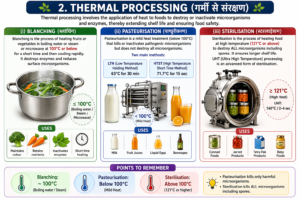
Om Sir: Baccho, ये सबसे common method है। Temperature से microbes को kill या inactive किया जाता है। तीन types याद करो: |
- (i) Blanching: Boiling water या microwave में 100°C से below। Enzymes destroy होते हैं। Vegetables को processing से पहले blanch करते हैं।
- (ii) Pasteurization: Mild heat — 100°C से below। Pathogenic microorganisms को inactive करता है। LTH: 63°C/30 min; HTST: 71.7°C for 15 sec
- (iii) Sterilization: High temperature (121°C) — सभी microorganisms को kill करता है। Shelf life 6 months से ज़्यादा। UHT processing (140°C/2–4 sec) भी इसी का advanced form है।
|
Points to Remember: |
-
B) Drying / Dehydration — सुखाना
Drying perhaps the oldest method of food preservation। Weight of product reduced to 1/4th to 1/8th of original after drying।
- Solar Drying — सूरज की रोशनी में
- Atmospheric Drying — batch (cabinet/mechanical) या continuous (fluidized bed, spray, drum drying)
- Osmotic Dehydration
- Freeze Drying (Sub-atmospheric dehydration) — सबसे advanced method
Chemical Preservation — रासायनिक तरीके
- High Sugar Preservation: Sugar के साथ food preserve करना — water activity 0.70 से कम। Jam, Jelly, Murabbah।
- Salt/Acid/Spices (Pickling): Common salt या vinegar में preserve करना। Pickles, sauces। Spices और edible oils भी add होते हैं।
- Chemical Additives: FDA approved chemical preservatives जैसे Sodium Benzoate, Potassium Metabisulphite। Small quantities (up to 0.2%) — food की organoleptic properties affect नहीं करतीं।
Biological Preservation (Fermentation)
Fermentation technology involves alcoholic या acidic fermentations using selected desirable microorganisms। ये methods microorganisms को reduce करते हैं — लेकिन lactic acid bacteria को encourage करते हैं जो highly desirable हैं।
Hurdle Technology — Combined Preservation
|
Om Sir: Hurdle Technology — यानी एक से ज़्यादा preservation methods को मिलाकर use करना। |
Value Added Products from Horticultural Crops
- Fruits & Vegetables
- Jam: Fruit pulp को sugar के साथ boil करो। TSS ≥ 68%। Cloudy appearance। Single fruit या mixed fruits से।
- Jelly: Fruit extract + pectin + sugar + acid। Transparent, clear appearance। Firm but tender।
- Marmalade: Citrus fruit jelly जिसमें fruit slices या shredded peel suspended हो।
- Preserves (Murabbah): Whole fruits या vegetables को sugar में preserve करना। TSS ≈ 70%। Hermetic sealing ज़रूरी।
- Chutneys & Sauces: Fruit/vegetable को spices, salt, sugar, vinegar के साथ। Tomato, mango, amla popular। Chemical preservatives जैसे Sodium Benzoate, Potassium Metabisulphite long-term storage के लिए।
-
Fruit Juices & Beverages
- Unfermented Beverages: Natural/sweetened juices, nectar, cordial, squash, syrup, RTS, fruit juice concentrate। Pasteurization सबसे common preservation method।
|
Key FPO Specifications (याद करो!): |
- Fermented Beverages: Wine, beer, sherry, cider, kanji — yeast और bacteria के through fermentation।
- Carbonation: CO₂ add करके beverage को carbonated बनाना — distinctive taste देता है, साथ ही undesirable microorganism growth रोकता है।
- Pickles: Common salt या vinegar में preserve करना। Types: Unfermented (spices and oil use) और Fermented (lactic acid fermentation)।
- Dried Products: Grapes → Raisins। Citrus powder, amchur (dried mango powder)।
III. Floricultural Crops
- Dry Flowers & Pot Pourri: Sand drying और air-drying। Fixatives जैसे salt, gum benzoin add करते हैं।
- Essential Oils, Flavours & Fragrances: Floral extracts — domestic और international market में demand। Supercritical fluid extraction (CO₂ based) — high purity extracts।
- Pharmaceutical & Nutraceuticals: Plants produce pharmacologically valuable compounds — pigments, oils, alkaloids।
- Pigments & Natural Dyes: Anthocyanins, flavonoids, carotenoids — pharmaceutical use।
- Gulkand, Rose Water, Vanilla Products: Gulkand = dried rose petals + sugar (1:2 ratio), sun-dried। Sharbat के रूप में use।
- Insecticidal & Nematicidal Compounds: Natural plant metabolites — fly/mosquito repellent, kills insects and aphids।
Book Exercises — Chapter 2 (With Answers)
Check Your Progress
Q1. What is thermal processing? Describe different methods of thermal processing.
Answer: Thermal processing वह process है जिसमें food को heat देकर microorganisms को destroy या inactivate किया जाता है। इसके तीन main methods हैं: (i) Blanching — 100°C पर या नीचे, enzymes destroy करता है; (ii) Pasteurization — 100°C से नीचे mild heat, pathogenic microbes inactive; LTH (63°C/30 min) और HTST (71.7°C/15 sec); (iii) Sterilization — 121°C पर high temperature, सभी microbial cells kill, shelf life 6+ months।
Q2. Describe briefly different methods of preservation of fruit juices and beverages.
Answer: Fruit juices preserve करने के methods: (i) Pasteurization — Holding method 85°C for 15-30 minutes Over-flow method, Flash pasteurization; (ii) Carbonation — CO₂ add करना, microorganism growth रोकता है; (iii) Chemical Preservation — 700 ppm Potassium Metabisulphite या 700 ppm Sodium Benzoate; (iv) Fermentation — Alcoholic, Lactic या Acetic fermentation।
Q3. Enlist the value-added products that can be made from fruits.
Answer: Fruits से बनने वाले value-added products: Jam, Jelly, Marmalade, Preserves (Murabbah), Chutney, Sauce, Fruit Juice, Squash, Syrup, Nectar, RTS beverages, Cordial, Fruit Juice Concentrate, Pickles, Dried products (Raisins, Amchur), Fermented beverages (Wine, Beer)।
Q4. Briefly discuss about the principles involved in preservation of fruits and vegetables.
Answer: Preservation के 3 main principles: (i) Prevention/delay of microbial decomposition — asepsis, filtration, low temperature, drying, chemicals, heat/radiation; (ii) Prevention/delay of self-decomposition — enzyme destruction by blanching, oxidation prevention by antioxidants; (iii) Prevention of damage by insects, rodents, mechanical damage — proper packaging और storage।
Fill in the Blanks — Answers
- Jam is cloudy, while Jelly is transparent/clear
- Sterilisation of food can be achieved after exposing to about 121°C
- Blanching is done to inactivate enzymes
- Gulkand is a processed product retained from the rose flower
- Jam contains 68.5% sugars
- The process of food preservation in salt or vinegar is called Pickling
- RTS should have a minimum of 10% fruit pulp
- In drying/dehydration, the weight of the product is reduced to 1/4th to 1/8th of the original weight
- For preparing carbonated drinks, CO₂ gas is used
- Nicolas Appert is called the father of canning
Quick Comparison Table — Preservation Methods
|
Method |
Temperature / Condition |
Effect |
|---|---|---|
|
Blanching |
≤ 100°C (boiling water/microwave) |
Destroys enzymes; reduces surface microbes |
|
Pasteurization |
Below 100°C (63°C/30 min or 71.7°C/15 sec) |
Inactivates pathogenic microorganisms |
|
Sterilization |
121°C or higher (UHT: 140°C/2-4 sec) |
Kills ALL microorganisms; 6+ months shelf life |
|
Drying |
Removes moisture (aw < 0.70) |
Prevents microbial growth |
|
Chemical Preservation |
Sodium Benzoate / KMS added |
Inhibits microbial growth |
|
Fermentation |
Lactic/Alcoholic/Acetic |
Produces preservative metabolites |
|
Hurdle Technology |
Combined multiple methods |
Synergistic preservation effect |
|
Om Sir का Final Message: |
Class 11 Horticulture Chapter 2 Full Notes PDF Download