


Chapter 3 – Food Preservation Syrups Brines and Food Colours Class 11 Notes
Food Preservation: Syrups, Brines, and Food Colours Class 11 Notes MP3 Part 1
Food Preservation & Processing | आसान भाषा में समझें
1. Introduction | परिचय
बच्चों, जब भी हम कोई फल या सब्जी को लम्बे समय तक store करना चाहते हैं, तो सिर्फ़ सुखाना ही एक तरीका नहीं है। हम Sugar (चीनी) और Salt (नमक) का इस्तेमाल करके भी food को खराब होने से बचा सकते हैं। इस Chapter में हम तीन बहुत महत्वपूर्ण चीज़ें सीखेंगे — Syrups, Brines और Food Colours।
सोचो, दादी माँ जब आँवले का मुरब्बा बनाती हैं या आप बाज़ार से डिब्बाबंद लीची या Cherry खरीदते हैं — वो सब चीनी के गाढ़े घोल में डूबे होते हैं। उसी घोल को हम ‘Syrup’ कहते हैं। ये सिर्फ़ मीठा करने के लिए नहीं, बल्कि फल को सड़ने से बचाने के लिए होता है।
इस पूरे Chapter में हम इन सभी topics — Syrups, Brines and Food Colours — को बहुत ही सरल और आसान भाषा में समझेंगे। आपकी पढ़ाई को और आसान बनाने के लिए हम आपको Food Preservation Syrups Brines and Food Colours Class 11 Notes के रूप में Solved Material, PDF Notes और Audio Notes भी उपलब्ध करा रहे हैं, जिससे आप अच्छे से समझ सकें और आसानी से revision कर सकें।
Learning Objectives | अध्याय के उद्देश्य
|
इस Chapter को पढ़ने के बाद आप सीखेंगे: • ✓ Fruits की preservation के लिए Syrup कैसे बनाते हैं और उसकी concentration कैसे decide करते हैं • ✓ Syrup और Brine में क्या अंतर है — कब कौन सा use करें • ✓ Degree Brix (°Bx) और Salometer Degree से concentration कैसे नापते हैं • ✓ Preservatives क्या होते हैं — Class I (Natural) vs Class II (Synthetic) • ✓ KMS / SO₂ के advantages और limitations in detail • ✓ Food Colours — 7 types of natural pigments और FSSAI permitted synthetic colours |
Section 1 — Syrup (शरबत / चाशनी)
1.1 Syrup क्या होता है? | What is Syrup?
|
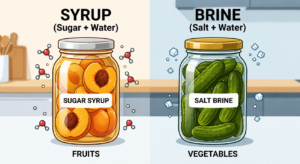
Syrup — पानी में एक निश्चित मात्रा में Sugar (sucrose / cane sugar) घोलने से जो solution बनता है उसे SYRUP कहते हैं। A solution of a known quantity of sugar in a known quantity of water is called a SYRUP. |
|
Teacher’s Note — Syruping process सिर्फ FRUITS के लिए होती है, Vegetables में नहीं। इसके दो main functions हैं: • Flavour Improvement: Fruit का स्वाद और appeal बेहतर बनाना • Heat Transfer Medium: Canning/bottling के दौरान heat को food तक efficiently पहुँचाना ताकि sterilisation ठीक से हो |
1.2 Syrup की Strength — Degree Brix (°Bx)
Syrup की concentration को Degree Brix (°Bx) में measure किया जाता है।
|
1°Bx = 100 gram solution में 1 gram sugar Example: 40°Bx syrup → 100g घोल में 40g चीनी — यानी 40% sugar concentration Measurement Tool: Brix Refractometer या Hydrometer से नापते हैं
|
1.3 Syrup के Types — Light, Medium, Heavy
Fruit की acidity और sweetness के according syrup की strength choose की जाती है:
Teacher’s Tip: जितना खट्टा फल होगा, उतना Heavy (गाढ़ा) Syrup चाहिए — क्योंकि acid को balance करने के लिए ज़्यादा sugar चाहिए।
|
Type |
Sugar Conc. (%) |
Degree Brix (°Bx) |
कहाँ Use होता है? |
|
Light Syrup (हल्का) |
20–25% |
20–25°Bx |
सेब, नाशपाती जैसे naturally मीठे fruits |
|
Medium Syrup (मध्यम) |
30–40% |
30–40°Bx |
आड़ू, चेरी, अनानास के लिए |
|
Heavy Syrup (गाढ़ा) |
45–65% |
45–65°Bx |
खट्टे फल जैसे आलूबुखारा, phalsa, मुरब्बा |
Syrup Strength — 1 kg Sugar में कितना Water? (Quick Reference)
|
Strength |
Sugar (1 kg) |
Water (litres) |
|
Light |
1 kg |
2.0 litres |
|
Medium |
1 kg |
1.5 litres |
|
Heavy |
1 kg |
1.0 litres |
1.4 Syrup Concentration Table — 1 Litre Water में कितनी Sugar?
|
Sugar (kg) per 1 litre water |
Syrup Concentration (%) |
|
0.250 |
20% |
|
0.333 |
25% |
|
0.428 |
30% |
|
0.538 |
35% |
|
0.666 |
40% |
|
0.818 |
45% |
|
1.000 |
50% |
|
1.222 |
55% |
1.5 Syrup Filling — Process Details
|
Filling Temperature: 79 to 82°C — गर्म syrup डाला जाता है can/jar में Concentration Range: 20 to 55° Brix — fruit की acidity पर depend करता है Head Space: 0.3 to 0.5 cm छोड़ा जाता है can के top पर Optional Additives: Citric acid + Ascorbic acid (Vitamin C) — flavour & nutrition के लिए Important Rule: Fruits rich in acid = less concentrated syrup. ज़्यादा acid वाले फल में हल्का syrup use करो। |
Section 2 — Brine (नमक का घोल)
2.1 Brine क्या होता है? | What is Brine?
|
Brine — पानी में एक निश्चित मात्रा में Salt (common salt / NaCl) घोलने से जो solution बनता है उसे BRINE कहते हैं। A solution of a known quantity of salt in a known quantity of water is called a BRINE. |
Food Preservation Syrups Brines and Food Colours Class 11 Notes MP3
|
Key Difference याद रखो: Syrup = Fruits के लिए | Brine = Vegetables के लिए Brining का Science: Namak (salt) osmosis के through microbes (bacteria, yeast, fungi) की cells से सारा पानी खींच लेता है और उन्हें मार देता है। इसी process को Osmotic Dehydration कहते हैं। Brine Objectives: Syrup की तरह ही — Flavour improve करना + Heat transfer medium का काम करना |
2.2 Brine की Strength — Salometer Degree
|
Salometer Degree से Brine की concentration नापते हैं। 100° Salometer = Saturated Salt Solution at 15.6°C = approx. 26.4% NaCl Hot Brine Filling: 79–82°C पर 1–3% concentration का hot brine डाला जाता है |
2.3 Brine के Types
|
Type |
Salt Conc. (%) |
Salometer ° |
Use |
|
Light Brine (हल्का) |
2–3% |
8–12° |
हल्का अचार, Canning से पहले Blanching |
|
Medium Brine (मध्यम) |
5–10% |
20–40° |
अचार, जैतून (Olives), general vegetables |
|
Heavy Brine (गाढ़ा) |
15–25% |
60–100° |
मछली, मांस का long-term संरक्षण |
2.4 Brine Concentration Table — 1 Litre Water में कितना Salt?
|
Salt (g) |
Brine Conc. (%) |
Salt (g) |
Brine Conc. (%) |
|
10.0 g |
1% |
47.33 g |
5% |
|
20.4 g |
2% |
111.11 g |
10% |
|
30.92 g |
3% |
176.47 g |
15% |
|
41.66 g |
4% |
— |
— |
Section 3 — Preservatives (परिरक्षक)
3.1 Preservative — Definition
|
Preservative — वह पदार्थ जो food में fermentation, acidification या किसी अन्य decomposition process को रोकता, धीमा करता, या बंद करता है — उसे PRESERVATIVE कहते हैं। Any substance capable of inhibiting, retarding or arresting the process of fermentation, acidification or other decomposition of food is called a PRESERVATIVE. |
|
IMPORTANT — Class I vs Chemical Preservatives का Confusion: Salt, Sugar, Vinegar, Spices, Oil — ये CHEMICAL FOOD PRESERVATIVES नहीं कहलाते! ये Natural / Class I Preservatives हैं। Chemical food preservatives = Synthetic compounds जो 0.2% से भी कम quantity में डाले जाते हैं। FSSAI Rule: Chemical preservatives food की organoleptic properties (taste, smell, appearance) और physico-chemical properties को नहीं बदलने चाहिए। |
3.2 Classification of Preservatives
CLASS I — Natural Preservatives (प्राकृतिक परिरक्षक)
|
Characteristics: Comparatively higher concentrations में use होते हैं। FSSAI ने कोई fixed limit नहीं दी — Good Manufacturing Practice (GMP) के अनुसार use करते हैं।
|
CLASS II — Synthetic Preservatives (रासायनिक परिरक्षक)
|
Characteristics: बहुत कम quantity में डाले जाते हैं — up to 0.2% (2000 ppm तक)। FSSAI ने हर एक की Permissible Limit दी है।
|
3.3 SO₂ / KMS — Deep Research
KMS का Full Form और कैसे काम करता है?
|
KMS = Potassium Meta-Bisulphite (K₂S₂O₅) जब KMS पानी या Food के संपर्क में आता है, तो Sulphur Dioxide (SO₂) gas release होती है — यही actual preservative का काम करती है। K₂S₂O₅ + H₂O → 2KHSO₃ → 2SO₂ + 2KOH SO₂ को ‘Universal Preservative’ कहते हैं क्योंकि यह bacteria, yeast, और moulds — तीनों पर काम करता है। |
✅ SO₂ / KMS के Advantages (फायदे)
|
• Bacteria के against: Sodium Benzoate से ज़्यादा effective — bacteria को बेहतर तरीके से रोकता है • Colour retention: Beverages का colour ज़्यादा देर तक retain करता है — Sodium Benzoate से बेहतर • Gas property advantage: Gas होने के कारण juice की surface layer को भी preserve करता है • High solubility: Juices और squashes में highly soluble — better and uniform mixing होती है • Easy removal: Extra SO₂ को juice को 71°C तक heat करके या vacuum से आसानी से हटा सकते हैं • Anti-browning Agent: Enzymatic browning को रोकता है — fruits और vegetables का रंग काला होने से बचाता है • Vitamin C Protection: Ascorbic acid (Vitamin C) को oxidation से बचाता है |
❌ SO₂ / KMS की Limitations (सीमाएँ)
|
• Naturally coloured juices में NOT suitable: Phalsa, Jamun, Strawberry, Coloured Grapes, Plum — इनमें SO₂ colour को BLEACH कर देता है। Anthocyanins destroy हो जाते हैं। • Tin containers में corrosion: SO₂, tin को corrode करता है — pinholes बनाता है। साथ ही Hydrogen Sulphide (bad smell) और Black Compound भी बनाता है। • Alkaline medium में inactive: यह केवल Acidic food (जैसे Fruit Juice, Pulp) में काम करता है। Alkaline medium में ineffective। • Taste/Odour issue: Freshly prepared beverages में slight taste और odour आता है — हालांकि dilute करने पर यह problem solve हो जाती है। • Allergy risk: कुछ लोगों को SO₂ से allergy हो सकती है — Asthma के मरीज़ों के लिए harmful। |
3.4 Other Important Class II Preservatives
|
• Sodium Benzoate: Bacteria के against strong action। Moulds और certain yeast species के against भी effective। Acidic medium में best। • Sorbic Acid: Moulds और yeasts पर highly effective। Higher dosage में bacteria पर भी काम करता है। • Formic Acid: Yeasts और moulds में ज़्यादा effective, bacteria में कम। |
|
⚠️ CRITICAL RULE: Preservative को SOLID form में directly food में कभी नहीं डालना चाहिए! पहले पानी या juice में घोलो — फिर mix करो। वरना fermentation शुरू हो सकती है! |
3.5 Floral Preservatives — Flowers के लिए
Flowers की vase life बढ़ाने के लिए अलग preservatives use होते हैं:
|
Preservative |
Notes |
|
Sucrose solution |
Basic energy source for flowers |
|
8-HQC (8-hydroxyquinoline citrate) |
Antimicrobial, widely used |
|
Silver Nitrate / STS (Silver Thiosulphate) |
Ethylene inhibitor — slows wilting |
|
Cobalt Chloride, Physan, Aluminium Sulphate |
Various antimicrobial roles |
Section 4 — Food Colours (खाद्य रंग)
|
Teacher’s Introduction: हम आँखों से खाना पहले खाते हैं! Consumer सबसे पहले colour देखता है — फिर quality judge करता है। एक processed product का colour उसकी market value decide करता है। Food colours दो types के होते हैं — Natural और Synthetic। |
4.1 Natural Colouring Matters — 7 Major Types
Fruits और vegetables में ये natural pigments होते हैं जो 7 main groups में आते हैं:
(a) Chlorophylls — हरा रंग (Green)
|
Properties: Fat-soluble green pigments। Photosynthesis के लिए responsible। Chemistry: Porphyrin ring structure (Haemoglobin भी इसी family में है — Iron की जगह Magnesium होता है।) Stability: Storage में हमेशा कुछ deterioration होती है — chahe कोई भी processing use करें। Heat से Chlorophyll → Pheophytin (olive-brown colour) बन जाता है। Examples: पालक (spinach), मेथी, हरी मिर्च, लौकी, मटर |
(b) Carotenoids — नारंगी-पीला रंग (Orange-Yellow)
|
Properties: Fat-soluble, orange-yellow pigments। Heat stable — processing में ज़्यादा नहीं टूटते। History: पहला carotenoid Carrot से isolate हुआ था — इसीलिए नाम ‘Carotene’ पड़ा। Most Widely Distributed: Lutein, Violaxanthin, Neoxanthin — Green leaves में। Important Ones: Lycopene (Tomato — red colour), Capsanthin (Red Pepper), Bixin (Annatto), Beta-Carotene (Carrot) Industrial Sources: Annatto, Saffron, Paprika, Tomato — natural food colourants के रूप में use। Examples: गाजर, कद्दू, आम, संतरा, टमाटर, केसर |
(c) Anthocyanins — लाल, नीला, बैंगनी (Red, Blue, Purple)
|
Properties: Water-soluble compounds — cell sap में होते हैं। pH Sensitivity (EXAM IMPORTANT!): Low pH (acidic) = Intense Red | pH बढ़ने पर Orange → Blue/Purple में बदल जाता है। SO₂ Effect: SO₂ / Sulphite quickly anthocyanins को BLEACH कर देता है — इसीलिए Jamun, Phalsa, Strawberry juice में SO₂ use नहीं होता! Sugar Effect: Sugar anthocyanins की stability को influence करता है। Examples: जामुन, काला अंगूर, Red Cabbage, Cherry, Apple (skin), Flowers |
(d) Flavonoids — पीला-सफेद रंग (Yellow-White)
|
Properties: Water-soluble, polyphenolic substances। Anthocyanins जैसी structure लेकिन अलग properties। Sub-groups: Flavones, Flavonols, Flavanones, Chalcones, Anthoxanthins Special Note: Flavones + Anthoxanthins — Potato और Cauliflower का cream-white colour के लिए responsible। Flavanones: मुख्यतः Citrus plants में, synthetic sweeteners की तरह use हो सकते हैं। Stability: Heat और oxidation के against Anthocyanins से ज़्यादा stable। Examples: आलू (potato), फूलगोभी (cauliflower), पीले छिलके वाला प्याज़ |
(e) Tannins — भूरा रंग / Enzymatic Browning
|
Properties: Colourless or yellow substances — लेकिन oxygen के exposure पर BROWN हो जाते हैं। Enzymatic Browning: Polyphenol Oxidase enzyme + O₂ + Tannins = Brown colour। यही process बैंगन, लौकी, सेब काटने पर काले होने के लिए responsible है। Prevention: काटने के बाद पानी या salt water में डाल दो — oxygen से contact कट जाता है। Astringency: Kasaila (कसैला) taste के लिए भी responsible। Chemistry: Polymeric polyphenolics = Tannic acid / Gallotannic acid + Flavone derivatives। Two groups: (i) Condensed Tannins — catechins, (ii) Hydrolyzable Tannins — gallic acid (gallotannins), ellagic acid (ellagitannins) Examples: बैंगन, लौकी, सेब, चाय (Tea — high tannin content) |
(f) Quinones & Xanthones — पीले से काले तक
|
Properties: Colour range: Pale Yellow to almost Black। Cell sap में — flowering plants, fungi, bacteria, algae में। Most Abundant: Anthraquinone derivatives। Xanthones: Yellow pigments। Most well-known Xanthone: Mangiferin — Mangoes में glucoside के रूप में present। Examples: आम (Mango) — Mangiferin pigment |
(g) Betalains — लाल-पीला रंग (Red-Yellow) — चुकंदर
|
Properties: Red and Yellow pigments। Red Beet (Beta vulgaris / Chukandar) में मुख्यतः। Also found in: Cactus fruits, Pokeberries, Bougainvillea flowers। UNIQUE FEATURE: Anthocyanins और Flavonoids जैसी structure — लेकिन उनके unlike NITROGEN contain करते हैं। यही सबसे important difference है exam में। pH Stability: pH 4–6 में stable — लेकिन thermal processing (जैसे canning) में degrade हो जाते हैं। Examples: चुकंदर (Beetroot), Bougainvillea के फूल |
4.2 Natural Pigments — Quick Comparison Table
|
Pigment |
Colour |
Solubility |
pH Effect? |
Examples |
|
Chlorophyll |
Green |
Fat-soluble |
Turns olive in heat |
Palak, Methi |
|
Carotenoids |
Orange-Yellow |
Fat-soluble |
Stable |
Gajar, Tamatar |
|
Anthocyanins |
Red-Blue-Purple |
Water-soluble |
YES — pH sensitive |
Jamun, Angoor |
|
Flavonoids |
Yellow-White |
Water-soluble |
Stable vs heat |
Aloo, Gobhi |
|
Tannins |
Brown (on oxidation) |
Water-soluble |
Browning reaction |
Baingan, Apple |
|
Quinones/Xanthones |
Yellow to Black |
Cell sap |
Stable |
Mango (Mangiferin) |
|
Betalains |
Red-Yellow |
Water-soluble |
pH 4-6 stable |
Chukandar (Beetroot) |
4.3 FPO (Fruit Products Order) 1955 — Permitted Natural Colours
|
India में Fruit Products Order (FPO), 1955 के according, ये natural colouring matters किसी भी food में add की जा सकती हैं:
Additionally Permitted: Dehydrated beet powder, Carrot oil, Strawberry/Cherry juices — ice cream को pink colour देने के लिए। ये सब FSSAI approved natural colour additives हैं। |
4.4 Synthetic Colours — कृत्रिम रंग
|
History: 1857 में पहला Coal Tar Dye आया। धीरे-धीरे बहुत से synthetic dyes food में use होने लगे। बाद में restrictions लगे। India में FPO (1955) / FSSAI के according — Coal Tar Dyes का use ALLOWED NAHI है — except ये following approved colours: |
|
Colour Shade |
Common Name |
Chemical Name / INS No. |
Max. Limit |
|
Red (लाल) |
Ponceau 4R, Carmoisine, Amaranth, Erythrosine |
INS 124, INS 122, INS 123, INS 127 |
100 ppm |
|
Yellow (पीला) |
Tartrazine, Sunset Yellow FCF |
INS 102, INS 110 |
100 ppm |
|
Blue (नीला) |
Indigo Carmine, Brilliant Blue FCF |
INS 132, INS 133 |
100 ppm |
|
Green (हरा) |
Fast Green S, Green FCF |
INS 143 |
100 ppm |
|
FSSAI Important Rule: Synthetic Colour की मात्रा food में 100 ppm (0.01%) से ज़्यादा नहीं होनी चाहिए। पैकेट पर लिखना ज़रूरी है: “CONTAINS PERMITTED SYNTHETIC FOOD COLOURS” |
4.5 Food Colour Use कैसे करते हैं? | How to Use
- Step 1 — Colour powder को थोड़े से cold water में paste बनाओ।
- Step 2 — Almost boiling water add करो — constant stirring के साथ।
- Step 3 — Cool होने दो — sediment को filtration से हटाओ।
- Step 4 — Glycerine add करो (10%) — density increase के लिए, sedimentation रोकने के लिए। Isopropyl alcohol भी solubility बढ़ाता है।
- Step 5 — Process के अंत में colour add करो ताकि गर्मी से खराब न हो।
|
⚠️ Advisory: Colours food को attractive बनाते हैं, लेकिन जितना हो सके avoid करें। Consumer को educate करें कि बिना colour के products better हैं। बच्चों के food में synthetic colour avoid करना ज़रूरी है। |
Section 5 — Book Exercises | अभ्यास प्रश्न (Solved)
Check Your Progress — Long Answer Questions
Q1. What is Syrup and Brine? How can you prepare syrups and brines of different concentration?
|
SYRUP — पानी में sugar (cane sugar / sucrose) dissolve करने से जो solution बनता है, use SYRUP कहते हैं। यह सिर्फ fruits की preservation में use होता है। Syrup के दो काम हैं — fruit का flavour improve करना और canning में heat transfer medium का काम करना। BRINE — पानी में salt (common salt / NaCl) dissolve करने से जो solution बनता है, use BRINE कहते हैं। यह सिर्फ vegetables की preservation में use होता है। Different Concentrations Prepare करना: • Syrup: 1 litre पानी में sugar की मात्रा बढ़ाते या घटाते हैं। 20% syrup = 0.250 kg sugar/litre; 50% syrup = 1.000 kg sugar/litre • Brine: 1 litre पानी में नमक की मात्रा बढ़ाते या घटाते हैं। 1% brine = 10g salt/litre; 5% brine = 47.33g salt/litre • Syrup strength: Light = 1 kg sugar + 2 litres water | Medium = 1 kg + 1.5L | Heavy = 1 kg + 1L |
Q2. What is the importance of colour in fruit and vegetable industry? Enlist different colours.
|
Importance of Colour: • Consumer का सबसे पहला attention colour ही खींचता है। • Fresh product का colour — freshness और quality indicate करता है। • Processed products में colour — attractiveness और market value बढ़ाता है। • दो types: Natural colouring matters (7 groups) और Synthetic colours। Natural Colours (7 groups): Chlorophylls (green), Carotenoids (orange-yellow), Anthocyanins (red-blue-purple), Flavonoids (yellow-white), Tannins (brown), Quinones & Xanthones (yellow to black), Betalains (red-yellow) FPO Permitted Synthetic: Ponceau 4R, Carmoisine, Amaranth, Erythrosine (Red) | Tartrazine, Sunset Yellow FCF (Yellow) | Indigo Carmine, Brilliant Blue FCF (Blue) | Fast Green S, Green FCF (Green) |
Q3. What is preservative? Classify them. What are the major advantages of using SO₂?
|
Preservative Definition: वह पदार्थ जो food में fermentation, acidification या decomposition को रोका, धीमा, या बंद कर सके — PRESERVATIVE कहलाता है। Classification: • Class I (Natural): Common salt, Sugar, Dextrose, Spices, Vinegar, Honey — higher concentrations में। • Class II (Synthetic): Benzoic acid, SO₂/KMS, Sorbic acid, Propionic acid, Lactic acid, Nitrites, Nitrates — small quantities में। Major Advantages of SO₂: • Bacteria के against Sodium Benzoate से ज़्यादा effective। • Beverages का colour ज़्यादा देर तक retain करता है। • Gas होने से juice की surface layer भी preserve होती है। • Juices में highly soluble — better mixing। • Excess SO₂ easily remove हो सकता है — 71°C heat या vacuum से। |
Fill in the Blanks — Answers
|
Statement |
Answer |
|
Syrup is prepared by dissolving known quantity of _____ in water. |
Sugar (Sucrose / Cane Sugar) |
|
Brine is prepared by dissolving known quantity of _____ in water. |
Salt (Common Salt / NaCl) |
|
Anthocyanins are _____ soluble pigments. |
Water |
|
Red colour of tomato is due to _____. |
Lycopene |
|
Chemical food preservatives are added up to _____ per cent. |
0.2 (%) |
|
Betalains are found in _____. |
Red Beet (Beta vulgaris / Chukandar) |
|
Most widely distributed carotenoids in green leaves are _____ and _____. |
Lutein, Violaxanthin (& Neoxanthin) |
|
Class I preservatives include _____, _____ and _____. |
Common Salt, Sugar, Dextrose (Vinegar, Honey) |
|
_____ and _____ are examples of Class II preservatives. |
Benzoic Acid, Sulphur Dioxide (KMS) |
|
SO₂ cannot be used in juice of _____ due to bleaching action. |
Phalsa, Jamun (Strawberry, Plum, Coloured Grapes) |
|
Syrup की ताकत _____ में नापते हैं। |
Degree Brix (°Bx) |
|
KMS का full form _____। |
Potassium Meta-Bisulphite (K₂S₂O₅) |
|
FSSAI के अनुसार Synthetic Colour की max limit _____ है। |
100 ppm (0.01%) |
|
Tartrazine एक _____ Synthetic Food Colour है। |
Yellow (पीला) |
Section 6 — Quick Revision Table | एक नज़र में
|
Topic |
Key Point to Remember |
|
Syrup |
Sugar + Water | Fruits के लिए | Cane Sugar | 79-82°C filling | 20-55°Bx |
|
Brine |
Salt + Water | Vegetables के लिए | 1-3% hot brine | 79-82°C |
|
Syrup Types |
Light = 1kg sugar + 2L water | Medium = 1.5L | Heavy = 1L |
|
Degree Brix |
1°Bx = 100g solution में 1g sugar | Refractometer से नापते हैं |
|
Preservative |
Fermentation, Acidification, Decomposition को रोकता है |
|
Chemical Preservatives |
0.2% से कम | Organoleptic properties नहीं बदलते |
|
Class I |
Natural — Salt, Sugar, Vinegar, Honey, Spices | No fixed limit (GMP) |
|
Class II |
Synthetic — Benzoic Acid, SO₂, Sorbic Acid, etc. | FSSAI limit |
|
SO₂ / KMS Advantage |
Universal preservative, colour retention, gas property, easy removal |
|
SO₂ / KMS Limitation |
Coloured juices (jamun/phalsa) में नहीं | Tin corrode करता है | Allergy |
|
Chlorophyll |
Green, Fat-soluble, Photosynthesis, Porphyrin structure |
|
Carotenoids |
Orange-Yellow, Fat-soluble, from Carrot | Lycopene = Tomato |
|
Anthocyanins |
Red-Blue-Purple, Water-soluble, pH sensitive, SO₂ bleaches them |
|
Flavonoids |
Yellow-White, Water-soluble, Aloo-Gobhi, heat stable vs anthocyanins |
|
Tannins |
Enzymatic browning — Baingan, Apple | Colourless → Brown on oxidation |
|
Betalains |
Red-Yellow — Chukandar | Contains NITROGEN (unique) | pH 4-6 stable |
|
FPO 1955 |
India में food colours का regulation | 9 natural + 8 synthetic permitted |
|
Synthetic Colour |
Max 100 ppm | Tartrazine (Yellow) | Ponceau 4R (Red) | Coal tar dyes |
Food Preservation Syrups Brines and Food Colours Class 11 Notes Download
Prepared by: Om Sikarwar | CLASS ORB.COM | studentscareerguru.com
Chapter 3: Syrups, Brines and Food Colours — Deep Research Edition