

Ultimate Guide: Nationalism in India Class 10 Notes | ClassOrb
Class 10 | History | Chapter 2 CBSE | UP Board | State Boards | UPPSC
Bilingual Story-Format Notes — Hindi + British English
Arjun • Priya • Rohan • Sonu — और उनके प्रिय शिक्षक Om Sir
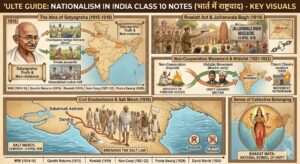
Introduction Nationalism in India — The Class Begins / कक्षा शुरू होती है
Nationalism in India Class 10 एक महत्वपूर्ण विषय है जो History Chapter 2 में भारत के स्वतंत्रता संग्राम को समझाता है। इस Ultimate Guide में आपको Nationalism in India Notes आसान Hindi + English में मिलेंगे, जिससे CBSE, UP Board और State Board के students को पढ़ने और revision में मदद मिलेगी। इन Class 10 History Chapter 2 Notes में Non-Cooperation Movement, Civil Disobedience Movement, Dandi March और Mahatma Gandhi की भूमिका को सरल तरीके से समझाया गया है। यह Nationalism in India summary आपको बताएगा कि कैसे किसान, मजदूर, विद्यार्थी और व्यापारी एकजुट होकर British rule के खिलाफ लड़े और राष्ट्रवाद की भावना विकसित हुई।
शनिवार की सुबह थी — a Saturday morning, crisp and cool. Om Sir की History की class शुरू होने वाली थी। Arjun, Priya, Rohan और Sonu अपनी-अपनी seat पर बैठ गए। Sir ने board पर लिखा:
“भारत में राष्ट्रवाद — Nationalism in India” — Chapter 2
Sir: “बच्चों, last chapter में हमने देखा कि Europe में nationalism कैसे फैला — how it spread through wars, revolutions and the dreams of nation-states. आज हम अपने घर की बात करते हैं। India में nationalism का मतलब बस एक चीज़ से नहीं था — यहाँ एक ही देश में अलग-अलग religions, भाषाएँ, और social classes थे। फिर भी एक shared struggle ने सब को जोड़ा। How? That is today’s question — यही आज का सवाल है।”
Arjun: “Sir, क्या Mahatma Gandhi के आने से ही यह सब बदला? Was he the turning point?”
Sir: “Haan Arjun — largely yes. But first we need some background. Three things matter above all: पहला — the First World War and its economic impact; दूसरा — the Khilafat question; तीसरा — the Rowlatt Act. Let us take them one by one.”
|
Core Idea / मुख्य विचार: India में nationalism was intimately connected with the anti-colonial movement — उपनिवेशवाद-विरोधी संघर्ष। People discovered their unity in the process of struggling against colonialism — अपनी एकता उन्होंने तब पाई जब वे मिलकर लड़े। |
PART 1 — पहली विश्व युद्ध / First World War, Khilafat और Non-Cooperation
1.1 — पहली विश्व युद्ध का प्रभाव / Impact of World War I (1914-1918)
Sir ने blackboard पर एक line लिखी: ‘War is fought outside — its pain is felt inside.‘ — युद्ध बाहर होता है, तकलीफ़ अंदर।
Sir: “The First World War created a new economic and political situation — एक नई आर्थिक और राजनीतिक स्थिति। इसने defence expenditure में बेतहाशा बढ़ोतरी की, जो war loans और increasing taxes से वित्त पोषित हुई। Customs duties बढ़ीं, income tax आया। Between 1913 and 1918 prices doubled — 1913 से 1918 के बीच चीज़ों की क़ीमतें दोगुनी हो गईं। ग़रीब लोगों पर extreme hardship पड़ी।”
Rohan: “Sir, गाँवों को क्या हुआ? What happened in the villages?”
Sir: “Rohan, villages were called upon to supply soldiers — गाँवों से जबरदस्ती फ़ौज में भर्ती की गई। इसे Forced Recruitment कहते हैं — a process by which the colonial state forced people to join the army. 1918-19 और 1920-21 में crops failed — फ़सलें बर्बाद हुईं। The influenza epidemic also struck. According to the 1921 census, 12 to 13 million people perished — 12–13 million people died. In Indian number system: 1.2 – 1.3 crore लोग अकालऔर बीमारी से मारे गये। People had hoped that after the war, their hardships would end. But that did not happen — पर ऐसा बिल्कुल नहीं हुआ।”
WW1 का Impact on India / पहले विश्व युद्ध का भारत पर असर▶ Heavy new taxes — customs duty and income tax बढ़े ▶ 1913-1918 के बीच prices doubled — क़ीमतें दोगुनी ▶ Forced Recruitment — गाँवों से ज़बरदस्ती फ़ौज में भर्ती ▶ Crop failures in 1918-19 and 1920-21 — अकाल की नौबत ▶ Influenza epidemic — 1.2-1.3 crore लोगों की मौत ▶ बढ़ता गुस्सा — growing anger against British rule |
1.2 — Satyagraha की सोच / The Idea of Satyagraha — Gandhi Ji का आना
Priya: “Sir, Gandhi Ji पहली बार India कब आए? When did he return?”
Sir: “Gandhi Ji returned to India in January 1915 — जनवरी 1915 में वे दक्षिण अफ्रीका से लौटे। There he had successfully fought against racist laws using a novel method of mass agitation which he called Satyagraha — वहाँ उन्होंने एक नया हथियार आज़माया था: सत्याग्रह।”
|
Satyagraha: यह न लाठी थी, न बंदूक — it was the power of truth and non-violence. Satyagraha is not passive resistance — it is active, intense resistance through moral force. ‘Non-violence is the supreme dharma.’ सत्याग्रही को दुश्मन को परेशान नहीं करना, बल्कि उसे सच देखने पर मजबूर करना है। |
Sonu: “Sir, Gandhi Ji ने India में पहले कौन से movements किए?”
Sir: “Sonu, three examples — तीन उदाहरण: Champaran, Kheda और Ahmedabad। तीन अलग-अलग जगह, तीन अलग-अलग दर्द — but one weapon: Satyagraha।”
Gandhi Ji के Early Satyagrahas (1917-1918)▶ Champaran, Bihar (1917): Peasants fighting the oppressive indigo plantation system — नील की खेती के खिलाफ़ किसानों का संघर्ष। Gandhi Ji organised Satyagraha — किसानों को राहत मिली। ▶ Kheda, Gujarat (1917): Crops had failed — फ़सल बर्बाद हुई। Peasants demanded the suspension of land revenue — लगान माफ करो। Satyagraha succeeded। ▶ Ahmedabad, Gujarat (1918): Cotton mill workers’ strike — सूती मिल के मज़दूरों की हड़ताल। Gandhi Ji fasted. Workers got 35% wage hike — 13 प्रतिशत wage hike मिला। |
1.3 — Rowlatt Act 1919 और Jallianwala Bagh
Sir: “Now — एक काले क़ानून की बात। In 1919, Gandhi decided to launch a nationwide Satyagraha against the proposed Rowlatt Act — 1919 में Angrezi sarkar ने Rowlatt Act पास किया। This Act gave the government enormous powers to repress political activities — इसने सरकार को यह ताक़त दी कि किसी भी व्यक्ति को बिना मुक़दमे के दो साल तक बंद रख सके।”
Arjun: “Sir, Gandhi Ji ने क्या किया? What was their response?”
Sir: “Gandhi Ji called this a ‘Black Act’ — काला क़ानून। On 6 April 1919, a nationwide hartal was called — पूरे देश में हड़ताल। Shops closed, workers went on strike, rail workshops shut down। Rallies were organised in various cities। The government panicked — सरकार घबराई। Local leaders were picked up, Gandhi Ji was barred from entering Delhi।”
फिर Sir की आवाज़ थोड़ी गम्भीर हो गई — then Sir’s voice grew quiet and grave:
Sir: “On 10 April, police in Amritsar fired upon a peaceful procession — Amritsar में पुलिस ने शांतिपूर्ण जुलूस पर गोली चलाई। Banks, post offices, railway stations were attacked. Martial law was imposed — फ़ौजी क़ानून लागू। General Dyer took command।”
Jallianwala Bagh Massacre — 13 April 1919 / जलियाँवाला बाग़ हत्याकांड
पूरी class चुप हो गई — the entire class fell silent — जब Sir ने यह कहानी शुरू की:
Sir: “13 April 1919 — the day of Baisakhi — बैसाखी का दिन। A large crowd gathered at the enclosed ground of Jallianwala Bagh in Amritsar — एक बड़ी भीड़ इकट्ठी थी। Some had come to protest against Rowlatt Act, others simply for the Baisakhi fair — कुछ protest करने, कुछ मेला देखने। General Dyer entered the area, blocked the exit points — बाहर जाने के रास्ते बंद कर दिए — and opened fire on the crowd, killing hundreds — और गोली चलाने का हुक्म दे दिया।”
|
His stated purpose? — उसका मक़सद? Dyer himself declared: ‘to produce a moral effect — to create in the minds of satyagrahis a feeling of terror and awe.’ यानी डर फैलाना। Hundreds of innocent lives were taken। यह ख़ूनी कांड पूरी दुनिया में Angrezi hukumat की बर्बरता का प्रतीक बन गया — it became the symbol of colonial brutality. |
1.4 — Khilafat Movement और Hindu-Muslim Unity / एकता
Sir: “The First World War ended with the defeat of Ottoman Turkey — पहला विश्व युद्ध Ottoman Turks की हार के साथ ख़त्म हुआ। There were rumours that a harsh peace treaty would be imposed on the Ottoman emperor — the Khalifa — who was the spiritual head of the Islamic world। Indian Muslims were deeply worried — भारत के मुसलमान बहुत चिंतित थे।”
Rohan: “Khalifa कौन होते हैं Sir? Who is the Khalifa?”
Sir: “Rohan, the Khalifa is the spiritual leader of Islam — Islam के spiritual नेता। In March 1919, a Khilafat Committee was formed in Bombay under Muhammad Ali and Shaukat Ali — मुहम्मद अली और शौकत अली के नेतृत्व में। Gandhi Ji saw an opportunity — यह Gandhi Ji को एक मौक़ा लगा। अगर Hindus and Muslims stand together — अगर हिंदू और मुसलमान एक साथ खड़े हो जाएँ — then British rule would be truly shaken। At the Calcutta Congress in September 1920, he persuaded other leaders to start both movements together — दोनों आंदोलनों को एक साथ शुरू करने का फ़ैसला हुआ।”
1.5 — Asahyog Aandolan / Non-Cooperation Movement — क्यों?
Sir: “In his famous book ‘Hind Swaraj’ (1909), Gandhi Ji had declared that British rule had been established in India with the cooperation of Indians — Angrezi hukumat भारत में सिर्फ़ इसलिए टिकी है क्योंकि भारतीयों ने उनका साथ दिया। If Indians refused to cooperate, British rule would collapse within a year, he said — अगर हम साथ न दें, तो एक साल में उनका राज धराशायी हो जाएगा। This was the philosophical foundation of the Non-Cooperation Movement — यही Non-Cooperation का आधार था।”
|
Non-Cooperation Programme — December 1920 में Congress द्वारा स्वीकृत ▶ Surrender titles awarded by the government — सरकार द्वारा दिए गए ख़िताब वापस करो ▶ Boycott civil services, army, police, courts and legislative councils — सरकारी संस्थाओं का बहिष्कार ▶ Boycott government-controlled schools and colleges — सरकारी schools-colleges छोड़ो ▶ Boycott foreign goods — विदेशी माल का बहिष्कार; burn foreign cloth — कपड़े जलाओ ▶ If government used repression — full civil disobedience campaign / सविनय अवज्ञा |
Congress में काफ़ी बहस हुई — there was intense debate within the Congress। कई लोग council elections का बहिष्कार करने से डरते थे। But at the Congress session at Nagpur in December 1920, a compromise was reached and the Non-Cooperation programme was adopted — समझौता हुआ और programme पास हो गया। January 1921 में आंदोलन शुरू हुआ।
PART 2 — Differing Strands / आंदोलन में अलग-अलग धाराएँ
Priya: “Sir, इतने बड़े देश में क्या सबने एक ही सपना देखा? Did everyone share the same dream?”
Sir: “Bahut acha sawaal, Priya — that is an excellent question! ‘Swaraj’ meant different things to different people — ‘स्वराज’ का मतलब हर वर्ग के लिए अलग था। The urban middle class had one vision, the peasants of Awadh another, the tribals of Andhra yet another। But all came together under the banner of the Congress। Let us understand each group carefully — एक-एक करके समझते हैं।”
2.1 — शहरों में आंदोलन / Movement in the Towns
Sir: “The movement started with middle-class participation in the cities — शहरों में मध्यवर्ग ने पहले हिस्सा लिया। Thousands of students left government-controlled schools and colleges — हज़ारों विद्यार्थियों ने सरकारी schools-colleges छोड़ीं। Headmasters and teachers resigned — headmasters और teachers ने इस्तीफ़े दिए। Lawyers gave up their legal practices — वक़ीलों ने court छोड़ी। The council elections of November 1920 were boycotted in most provinces।”
Arjun: “Sir, विदेशी कपड़े का क्या हुआ? What happened to foreign cloth?”
Sir: “Arjun, on the economic front the effects were dramatic — foreign goods were boycotted, liquor shops picketed, foreign cloth burnt in huge bonfires — विदेशी कपड़ों की bonfires जलाई गईं। The impact was striking: between 1921 and 1922, the import of foreign cloth halved — 1921-22 के बीच विदेशी कपड़े की आमद Rs 102 crore से घटकर Rs 57 crore रह गई। Indian merchants refused to trade in foreign goods — merchants ने विदेशी माल बेचना बंद कर दिया।”
पर धीरे-धीरे शहरी आंदोलन धीमा पड़ने लगा — but the urban movement gradually slowed down। क्यों? — Why? Because:
|
📌 Urban Movement क्यों Slow हुआ? ▶ Khadi — hand-woven cloth — was often more expensive than mill-produced cloth — खादी महँगी थी, ग़रीब नहीं ख़रीद सकते थे ▶ For the movement to succeed, alternative Indian institutions needed to be set up — सरकारी institutions के बदले desi institutions बनानी थीं — but they were slow to emerge ▶ Lawyers who had left the courts gradually drifted back — वक़ील वापस court में गए ▶ Poor people could not afford to boycott forever — अंतहीन boycott संभव नहीं था |
2.2 — गाँवों में विद्रोह / Rebellion in the Countryside
Sir ने एक map दिखाया — Sir pointed to a map of Uttar Pradesh:
Sir: “In Awadh — अवध में — peasants were led by Baba Ramchandra, a sanyasi who had earlier been to Fiji as an indentured labourer। The movement there was against talukdars and landlords — ज़मींदारों के ख़िलाफ़ — who demanded exorbitant rents। Peasants had to do begar — बेगार — labour at landlords’ farms without any payment। They had no security of tenure — किसान के पास ज़मीन का कोई हक़ नहीं था।”
Rohan: “फिर क्या हुआ Sir? What happened next?”
Sir: “Jawaharlal Nehru went to Awadh villages in June 1920 — जून 1920 से जवाहरलाल नेहरू अवध के गाँवों में गए। He was agitated and angry by what he saw. By October, Oudh Kisan Sabha was set up। Within a month, over 300 branches had been established। When the Non-Cooperation Movement began, the Congress tried to integrate the Awadh peasant struggle — पर आंदोलन वे दिशा लेने लगा जो Congress को मंज़ूर नहीं था: बाज़ारें लूटी गईं, ज़मींदारों के घर पर हमले हुए। Gandhi Ji’s name was being invoked to sanction all action — ‘Gandhi Ji ने कहा है कि अब ज़मीन हमारी होगी!’”
Sir: “Now for a very different story — अब Andhra Pradesh की एक बिल्कुल अलग कहानी। In the Gudem Hills of Andhra Pradesh, a militant guerrilla movement spread in the early 1920s — गुडेम Hills में एक militant guerrilla movement फैली। इसका नेता था Alluri Sitarama Raju — an extraordinary figure who claimed special powers. The colonial government had closed large forest areas, preventing hill people from entering them — ब्रिटिश सरकार ने जंगलों में प्रवेश बंद कर दिया। Raju attacked police stations, attempted to kill British officials — 1924 में Raju को पकड़कर फाँसी दी गई। He became a folk hero — लोक-नायक।”
2.3 — बाग़ानों में स्वराज / Swaraj in the Plantations — Assam
Sir: “For plantation workers in Assam, freedom meant something very concrete — Assam के चाय बाग़ानों में काम करने वाले मज़दूरों के लिए आज़ादी का मतलब था: the right to move freely in and out of the confined space of the plantations — बाग़ान से निकलकर अपने गाँव जाने की आज़ादी। Under the Inland Emigration Act of 1859 — 1859 के Inland Emigration Act के तहत — plantation workers were not permitted to leave the tea gardens without permission।”
|
When they heard of the Non-Cooperation Movement — जब Non-Cooperation की ख़बर पहुँची — thousands of workers defied the authorities, left the plantations and headed home। They believed Gandhi Raj was coming and that everyone would be given land — ‘Gandhi Raj आ रहा है, गाँव में ज़मीन मिलेगी।’ But they never reached their destination — वे कभी घर नहीं पहुँचे। Stranded by a railway and steamer strike, they were caught by the police and brutally beaten — पुलिस ने पकड़ लिया, बहुत पिटाई की। Their swaraj remained a dream — उनका स्वराज सपना ही रह गया। |
PART 3 — Towards Civil Disobedience / सविनय अवज्ञा की ओर
3.1 — Chauri Chaura और आंदोलन वापस / The Movement Withdrawn (February 1922)
Sonu: “Sir, Non-Cooperation Movement कब और क्यों रुका? When and why was it withdrawn?”
Sir: “February 1922 — Chauri Chaura, Gorakhpur। A peaceful demonstration suddenly turned violent — एक शांतिपूर्ण जुलूस अचानक हिंसा पर उतर आया। There was a clash with the police, the crowd retaliated, and a police station was set on fire — अंदर 22 policemen की मौत। Gandhi Ji was deeply disturbed — गांधी जी को बहुत गहरी चोट लगी। He said — जब तक लोग Satyagraha की training नहीं लेते, आंदोलन लायक नहीं। He called off the movement immediately — उन्होंने आंदोलन वापस ले लिया।”
Arjun: “Sir, Congress के नौजवान नेता क्या चाहते थे?”
Sir: “There was a deep tension within Congress — Congress में एक गहरी बेचैनी थी। C.R. Das and Motilal Nehru formed the Swaraj Party — वे council elections में बैठकर अंदर से reform की बात करना चाहते थे। But younger leaders — Jawaharlal Nehru, Subhas Chandra Bose — pressed for radical mass struggle and full independence — पूर्ण स्वतंत्रता / Purna Swaraj।”
3.2 — Simon Commission 1928 और Lahore Congress 1929
Sir: “In 1928, the British government sent the Simon Commission to look into the functioning of the constitutional system in India — भारत के संवैधानिक ढाँचे को देखने के लिए। Problem — the Commission did not have a single Indian member! They were all British — Commission में एक भी भारतीय नहीं था! All parties — Congress, Muslim League — participated in demonstrations greeting it with the slogan ‘Go Back Simon!’ — ‘Simon Go Back!’ Lala Lajpat Rai was assaulted by the police during a peaceful demonstration and later succumbed to his injuries।”
Sir: “December 1929 — Lahore Congress। Jawaharlal Nehru became president — अध्यक्ष बने। The demand for ‘Purna Swaraj’ — complete independence — was formalised — पूर्ण स्वराज की माँग सामने आई। 26 January 1930 was to be celebrated as Independence Day — स्वतंत्रता दिवस — when people would take a pledge to struggle for complete independence। Gandhi Ji now needed to find a way to relate this abstract idea of freedom to the concrete issues of everyday life — अब ज़रूरत थी एक ऐसी चीज़ की जो हर किसी को छुए।”
3.3 — Dandi March और Civil Disobedience Movement (1930) — नमक की क्रांति
Class में एक कविताई ख़ामोशी छाई — a poetic silence fell over the classroom — जब Sir ने यह कहानी शुरू की:
Sir: “Gandhi Ji found in salt a powerful symbol that could unite the nation — गांधी जी को एक ऐसा symbol मिला: नमक / salt। Salt was consumed by the rich and the poor alike — नमक अमीर और ग़रीब दोनों इस्तेमाल करते हैं। And it was one of the most essential items of food — खाने की एक बुनियादी ज़रूरत। The tax on salt and the government monopoly over its production — Gandhi Ji declared — revealed the most oppressive face of British rule — यह ब्रिटिश राज का सबसे बड़ा ज़ुल्म था।”
|
31 January 1930: Gandhi Ji sent a letter to Viceroy Irwin stating eleven demands — 11 माँगों वाला letter भेजा। If demands not met by 11 March, the Congress would launch civil disobedience — अगर 11 March तक माँगें न मानी गईं, तो Civil Disobedience शुरू होगी। |
Sir: “Irwin did not respond. So on 12 March 1930, Gandhi Ji started his famous salt march — Dandi March — accompanied by 78 of his trusted volunteers from his ashram at Sabarmati। The march was over 240 miles — 240 miles की यात्रा। They walked about 10 miles a day — रोज़ क़रीब 10 mile चलते थे। Thousands came to hear him wherever he stopped। On 6 April he reached Dandi — 6 April को Dandi पहुँचे — and ceremonially manufactured salt by boiling seawater — समुद्र के पानी को उबालकर नमक बनाया। Law broken — Civil Disobedience Movement shuru ho gaya!”
|
📌 CDM vs Non-Cooperation — Key Differences / मुख्य अंतर ▶ Not just non-cooperation — but actively breaking colonial laws / सिर्फ़ असहयोग नहीं — सीधे क़ानून तोड़ना ▶ Salt law violated; विदेशी कपड़े की दुकानों के बाहर picket; revenue refused ▶ Forest laws violated — जंगलों में घुसकर लकड़ी-चारा इकट्ठा किया — Reserved Forest laws की अवज्ञा ▶ Village officials — chaukidars — resigned / गाँव के अधिकारियों ने इस्तीफ़े दिए ▶ Women participated in huge numbers — पहली बार इस scale पर महिलाएँ घर से बाहर आईं ▶ Business classes also supported — FICCI formed; Indian merchants gave financial backing |
3.4 — Gandhi-Irwin Pact (March 1931) और Second Round Table Conference
Sir: “The government was worried — सरकार घबराई। Congress leaders were arrested one by one — Congress नेताओं को पकड़-पकड़कर jail भेजा। About 100,000 people were arrested — एक लाख लोगों को jail में डाला। Women and children were beaten। Yet the movement did not stop। Finally — March 1931 में — Gandhi-Irwin Pact। Gandhi Ji agreed to participate in the Second Round Table Conference in London। One condition: political prisoners would be released — jail में बंद satyagrahis को छोड़ा जाए।”
Rohan: “Conference कैसी रही Sir? How did the conference go?”
Sir: “It proved fruitless — बेकार रही। December 1931: Gandhi Ji went to London। But on return he found — वापस आकर देखा — Ghaffar Khan and Jawaharlal Nehru were both in jail। The government had begun a new cycle of repression। Gandhi Ji relaunched the Civil Disobedience Movement in 1932। But by 1934 it lost its momentum — 1934 तक आंदोलन थक गया। Yet the fire of freedom was not extinguished — पर आज़ादी की आग बुझी नहीं।”
PART 4 — Who Joined? / Civil Disobedience में कौन-कौन आया?
Priya: “Sir, क्या Civil Disobedience में सभी लोग आए? Dalits भी? Muslims भी?”
Sir: “Bahut zaroori sawaal, Priya — a very important question indeed। Let us examine each group carefully — एक-एक करके देखते हैं।”
4.1 — अमीर किसान / Rich Peasants
Gujarat के Patidar और UP के Jat — rich peasants — अमीर किसान। They grew commercial crops — tijaarati faslein। The Great Depression had caused prices to fall sharply — Depression की वजह से prices गिर चुकी थीं। They joined the CDM — but largely for their own purpose: tax reduction — tax घटाओ। When the movement was called off in 1931 without the revenue demands being met, they were deeply disappointed — वे बहुत मायूस हुए। When the movement was relaunched in 1932, many refused to participate।
4.2 — ग़रीब किसान / Poor Peasants
Poor peasants were mostly small tenants — ज़्यादातर छोटे किराएदार जो ज़मीन किराए पर लेते थे। The Great Depression had dried up cash incomes — Depression में cash income ख़त्म हो गई। They could not pay rent — किराया नहीं दे पाते थे। They were organised by Socialists and Communists and joined ‘no-rent campaigns’। But Congress was reluctant to support campaigns that might alienate landlords — Congress नहीं चाहती थी कि ज़मींदारों से सीधा टकराव हो। So the relationship between poor peasants and Congress remained uncertain — अनिश्चित रही।
4.3 — Business Classes / व्यापारी और उद्योगपति
Indian merchants and industrialists had grown powerful during the First World War — पहले विश्व युद्ध में भारतीय व्यापारी और उद्योगपति काफ़ी शक्तिशाली हो गए थे। They were frustrated by colonial policies that restricted Indian business। In 1927 they formed FICCI — Federation of Indian Chambers of Commerce and Industries। Led by industrialists like G.D. Birla, they supported the CDM financially — उन्होंने Civil Disobedience को financial support दिया। For them, ‘Swaraj’ meant a free market — एक ऐसा देश जहाँ British controls न हों और trade free हो।
4.4 — Industrial Working Class / औद्योगिक मज़दूर
The industrial working class did not participate in the Civil Disobedience Movement in large numbers — मज़दूर बड़ी तादाद में CDM में directly नहीं आए — except in the Nagpur region। Workers did adopt some Gandhian ideas — like the boycott of foreign goods and khadi — पर Congress unki ‘no-rent campaigns’ में उनके साथ खड़ी होने को तैयार नहीं थी। Still, railway workers struck in Bombay in 1930, dockers in 1932।
4.5 — महिलाएँ / Women — Ghar Se Bahar
After the Dandi March — Dandi March के बाद — thousands of women came out of their homes for the first time — हज़ारों महिलाएँ पहली बार घर से बाहर आईं। In urban areas they came from high-caste families, in rural areas from poor peasant households। They participated in protest marches — protest marches में हिस्सा लिया — manufactured salt, picketed foreign cloth and liquor shops, many went to jail।
|
Yet — there was a contradiction / एक विरोधाभास। Gandhi Ji framed women’s participation as sacred national duty — desh ki seva. But he was also convinced that women’s primary duty was to look after the home and family। Congress was reluctant to allow women to hold positions of authority within the organisation — sirf ‘symbolic presence’ kaafi tha। यह एक contradiction था — a deeply significant one। |
4.6 — Dalits और Civil Disobedience
Sonu: “Sir, Dalit लोग क्या इस आंदोलन में आए?”
Sir: “Sonu, the Dalits — who had begun calling themselves ‘dalit’ or oppressed by the 1930s — had their own political calculation। Congress called them ‘Harijan’ — children of God — and spoke of temple entry and social reform। But Dalit leaders had a different perspective — एक अलग ही perspective था।”
Sir: “Dr. B.R. Ambedkar organised the Dalits into the Depressed Classes Association in 1930 — उन्होंने Dalits को organised किया। His demand was political empowerment — राजनीतिक सशक्तिकरण। Separate Electorate — alag nirvaacan kshetra — so that Dalits could choose their own representatives। At the Second Round Table Conference, Ambedkar pressed this demand।”
|
When the British government conceded Ambedkar’s demand in 1932 — जब ब्रिटिश सरकार ने माँग मान ली — Gandhi Ji announced a fast unto death। He argued that separate electorates would permanently divide Hindu society। Ambedkar ultimately accepted Gandhi’s position। The ‘Poona Pact’ of September 1932: Scheduled Castes got reserved seats in provincial and central legislative councils — but to be voted in by the general electorate — not by Dalits alone। यह आज भी एक controversial agreement है। |
4.7 — Muslims और Civil Disobedience
After the collapse of the Khilafat-Non-Cooperation alliance, a large section of Muslims felt alienated from the Congress — Khilafat aandolan khatam hone ke baad Muslims ka ek bada hissa Congress se door ho gaya।
Sir: “From the mid-1920s the Congress came to be more visibly associated with Hindu religious nationalist groups like the Hindu Mahasabha — Congress को openly Hindu समझा जाने लगा। Hindu-Muslim riots became more frequent and severe। As relations worsened, the Muslim League argued that the interests of Muslims could be protected only through Separate Electorates — Muslim League का मानना था कि उनके हक़ों की रक्षा sirf alag nirvaacan kshetra se ho sakti hai। When the CDM started, many Muslim leaders and intellectuals could not respond to the call for a united struggle।”
PART 5 — Sense of Collective Belonging / मिलन की भावना कैसे बनी?
Arjun: “Sir, जब सबके सपने अलग थे, सबकी तकलीफ़ अलग थी — when everyone’s dreams were different — then where did this feeling of ‘Ek Bharat’ — ‘One India’ — come from?”
Sir: “Arjun, yahi iss chapter ki sabse important baat hai — that is the most important insight of this chapter। National feeling came from several cultural processes — several sources। Let us explore them।”
5.1 — Bharat Mata / भारत माता — Image of the Nation
Sir: “Bankim Chandra Chattopadhyay composed ‘Vande Mataram’ in the 1870s as a hymn to the motherland — माँ भूमि के लिए एक गीत। Later it was included in his novel ‘Anandamath’ and became widely sung during the Swadeshi movement। Then Abanindranath Tagore painted his famous image of Bharat Mata — भारत माता। In this painting she is portrayed as an ascetic, divine figure — dispensing learning, food and clothing। Just as Germania and Marianne had personified European nations — वैसे ही Bharat को एक माता के रूप में देखना शुरू हुआ। Popular prints showed Jawaharlal Nehru holding the image of Bharat Mata close to his heart।”
5.2 — Lok-geet aur Lok-Sahitya / Folklore and National Identity
In the late nineteenth century, nationalist intellectuals began — 19वीं सदी के अंत में nationalist intellectuals ने शुरुआत की — recording folk tales sung by bards and touring villages to gather folk songs and legends। Natesa Saastri published a massive four-volume collection of Tamil folk tales, ‘The Folklore of Southern India.’ He believed that folklore was national literature — the most trustworthy manifestation of people’s real thoughts — folklore देश की असली भावना है जिसे British ने भ्रष्ट किया है। Collecting it was essential to discovering national identity and restoring pride।
5.3 — Jhanda / The Flag — तिरंगा
During the Swadeshi movement in Bengal, a tricolour flag was designed — लाल, हरा, पीला। It had eight lotus flowers representing the eight provinces of British India and a crescent moon representing Hindus and Muslims। Gandhi Ji then designed the Swaraj flag — लाल, हरा, सफ़ेद — with the spinning wheel (charkha) at the centre: symbol of self-reliance, dignity of labour and economic independence। Carrying the flag, holding it aloft during marches — yeh ek netraakarshak taaqat tha — became a symbol of defiance और national pride।
5.4 — Itihaas ki Punarvyaakhya / Reinterpretation of History
The British said: ‘Indians cannot govern themselves’ — ‘भारतीयों में खुद को govern करने की ताक़त नहीं।’ Indians replied: ‘Look at our history!’ By the end of the nineteenth century, many Indians began to feel that to instill a sense of pride in the nation, Indian history had to be thought about differently — इतिहास को अलग नज़रिए से देखना होगा। Nationalist historians wrote about the glorious developments of ancient India — in art and architecture, science and mathematics, philosophy and law — when India had flourished। The decline came with colonialism।
|
एक चेतावनी / A word of caution: When the ‘glorious past’ being celebrated was largely Hindu — जब यह गौरव सिर्फ़ Hindu प्रतीकों तक सीमित था — then people of other communities — Musalmaan, Dalit — began to feel left out of this nationalist narrative। राष्ट्रवाद की चादर में सबको ढकना मुश्किल था — covering everyone with the blanket of nationalism was never simple। |
Antim Baat — The Last Word / कक्षा ख़त्म होती है
Bell बजने से 5 minute पहले Sir ने खड़े होकर एक बार फिर चारों दोस्तों की तरफ़ देखा — five minutes before the bell, Sir stood up and looked at all four friends:
Sir: “बच्चों — children — India’s nationalism was not a straightforward story। It was a coalition of many voices — bahut saari awaazein — each with its own understanding of freedom। A peasant demanded land rights, a worker demanded wages, a Dalit demanded dignity, a Muslim demanded political protection। Congress’s task was to bring them all under one roof — and it sometimes succeeded, sometimes did not। That is precisely why the movement had both unity and fracture — इसीलिए आंदोलन में एकता भी थी, टूट भी।”
Arjun: “Sir, तो क्या आज़ादी की लड़ाई सीधी थी या टेढ़ी? Was it a straight road or a winding one?”
Sir: “Bilkul tedhi, Arjun — winding at every turn। And in that very windingness lies its beauty — और उसी में उसकी ख़ूबसूरती है। A full century of effort, the sacrifice of millions — एक पूरी सदी की मेहनत, लाखों लोगों की क़ुर्बानी — tab jaake 15 August 1947 aaya। Call it straight, call it winding — par use salute zaroor karo — but always salute it।”
|
📌 परीक्षा के लिए ज़रूरी Dates / Important Dates for Examinations ▶ 1915: Gandhi Ji returned to India — भारत वापस आए ▶ 1917: Champaran Satyagraha — Bihar — indigo plantation ▶ 1917: Kheda Satyagraha — Gujarat — land revenue ▶ 1918: Ahmedabad Mill Strike — wage hike ▶ April 1919: Rowlatt Act hartal; Jallianwala Bagh massacre ▶ January 1921: Non-Cooperation-Khilafat Movement begins ▶ February 1922: Chauri Chaura — movement withdrawn ▶ 1927: FICCI formed ▶ 1928: Simon Commission ‘Go Back’; Bardoli Satyagraha ▶ December 1929: Lahore Congress — Purna Swaraj demand ▶ 26 January 1930: First Independence Day pledge ▶ 12 March 1930: Dandi March begins ▶ 6 April 1930: Gandhi makes salt — CDM begins ▶ March 1931: Gandhi-Irwin Pact ▶ December 1931: Second Round Table Conference, London ▶ September 1932: Poona Pact — Gandhi-Ambedkar ▶ 1932-34: Civil Disobedience (second phase) ▶ August 1942: Quit India Movement — ‘Do or Die’ |
|
📌 ज़रूरी Shabdaavali / Key Terms (Bilingual) ▶ Satyagraha: सत्य और अहिंसा पर आधारित संघर्ष — ‘Soul Force / Truth Force’ ▶ Forced Recruitment: colonial state द्वारा ज़बरदस्ती फ़ौज में भर्ती ▶ Begar / Begaar: unpaid forced labour — बिना मज़दूरी के काम ▶ Boycott: inkar karna — goods, institutions ya logon ka ▶ Picket: दुकान / factory के बाहर धरना — blocking entrance to a shop or office ▶ Hartal: strike — work stoppage — हड़ताल ▶ Khilafat: movement to defend the temporal powers of the Ottoman Khalifa ▶ Swadeshi: goods produced within one’s own country — विदेशी का बहिष्कार ▶ Purna Swaraj: complete independence — पूर्ण स्वतंत्रता — not Dominion Status ▶ Inland Emigration Act 1859: क़ानून जो Assam के बाग़ान workers को बाग़ान छोड़ने से रोकता था ▶ Alluri Sitarama Raju: Gudem Hills, Andhra Pradesh — tribal leader, guerrilla fighter ▶ Baba Ramchandra: Avadh में किसान आंदोलन का नेता ▶ Poona Pact: 1932 agreement between Gandhi and Ambedkar on Dalit representation |
Ultimate Guide: Nationalism in India Class 10 note Download
Ultimate Guide: Nationalism in India Class 10 Notes (H.M)
CLASS ORB.COM | Teacher: OM SIKARWAR | Jai Hind! 🇮🇳